
Blog
Why Conventional Pain Treatments Keep Failing You (And What SoftWave Therapy Does Differently)
Direct Answer
If you've cycled through cortisone injections, physical therapy, and rest without lasting relief, the reason is likely this: those treatments work at the symptom level, not the structural level. SoftWave Therapy uses electrohydraulic acoustic shock wave technology to restart stalled cellular repair at the actual injury site, which is a fundamentally different category of intervention.
Key Takeaways
-
Conventional treatments modify how you experience pain; SoftWave Therapy is designed to restart the biological repair process that chronic injury has stalled
-
Electrohydraulic shock waves stimulate angiogenesis (new blood vessel formation) and activate endogenous stem cells, meaning your own tissue's repair cells, to support structural regeneration
-
Sessions run 5 to 15 minutes with no injections, no medication, and no surgical recovery
-
Peak biological results typically emerge 8 to 12 weeks after treatment, reflecting real tissue change rather than a fading chemical effect
-
SoftWave Therapy isn't appropriate for every condition; honest fit assessment happens before any commitment is made
If Conventional Treatments Keep Failing, Here's Why
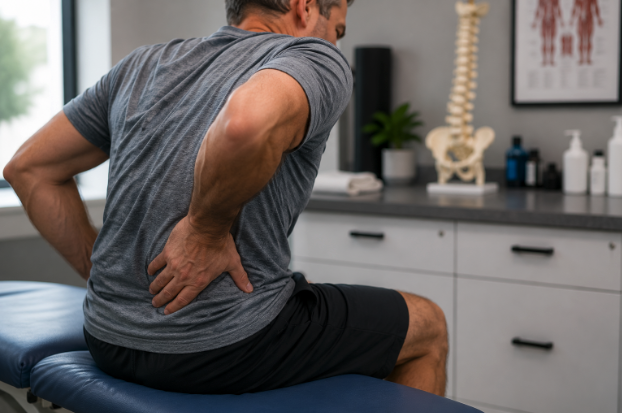
Chronic musculoskeletal pain doesn't announce itself as a crisis. It builds slowly, and so does the frustration of treatments that keep producing the same incomplete result.
The pattern most people describe follows a predictable arc. Physical therapy brings improvement. Things settle. A few weeks later, the same pain returns in exactly the same place. Cortisone injections reduce inflammation for a month, sometimes two, and then the tissue reverts. Rest removes the load but doesn't restart anything.
That isn't bad luck. It's the logical outcome of treatments designed to change what you feel rather than repair what's damaged. The structural problem generating the pain is still present. The nerves keep firing because the tissue never actually healed.
What's Actually Happening in Tissue That Won't Heal
Effective tissue repair depends on two things that chronically injured tissue is often short on: adequate blood supply and active cellular repair.
When an injury becomes chronic rather than acute, the local vascular network is frequently compromised. Without sufficient blood flow, the cells responsible for structural repair can't receive the oxygen and growth factors they require. The repair cycle stalls. Inflammation becomes self-perpetuating because the body keeps initiating the inflammatory response without the resolution phase that's supposed to follow.
This is why plantar fasciitis that has been present for 18 months doesn't respond the same way a fresh strain does. The biology isn't just slower. It's operating in a qualitatively different state, one that rest and anti-inflammatory intervention alone can't resolve.
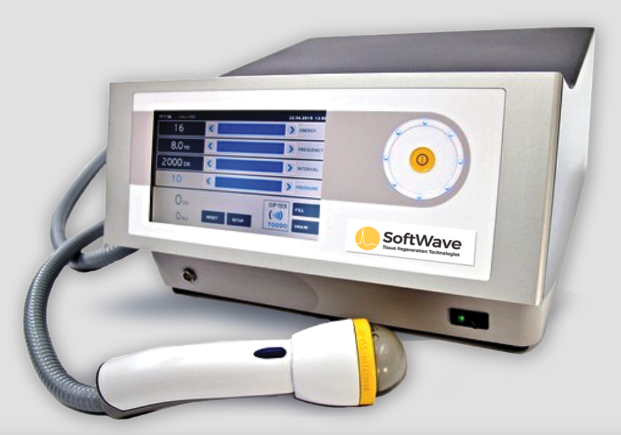
SoftWave Therapy addresses this directly. According to a peer-reviewed study by Wang, C.J., published in the Journal of Orthopaedic Surgery and Research in 2012 (available at https://doi.org/10.1186/1749-799X-7-11), extracorporeal shock wave therapy stimulates angiogenesis and promotes tissue regeneration in musculoskeletal conditions. The electrohydraulic parabolic reflector technology used by SoftWave generates a true unfocused shock wave that penetrates a broad tissue area, delivering that stimulus across the actual injury zone rather than a narrow focal point.
The waves activate endogenous stem cells, a term worth defining plainly. Endogenous stem cells are repair cells your own tissue already contains, not cells introduced through injection. When the correct stimulus reaches them, they begin producing the structural proteins needed for tissue repair. The body does the actual healing. SoftWave Therapy provides the biological trigger that restarts a process that's been stalled.
A second relevant source: Cheng, J.T. and colleagues published outcomes data on extracorporeal shock wave therapy for chronic tendinopathies in Physical Therapy in Sport (2018), further supporting the mechanism of vascular and cellular regeneration in conditions that haven't responded to conventional care.
What a Session Looks Like
"Shock wave therapy" sounds more intense than the experience actually is.
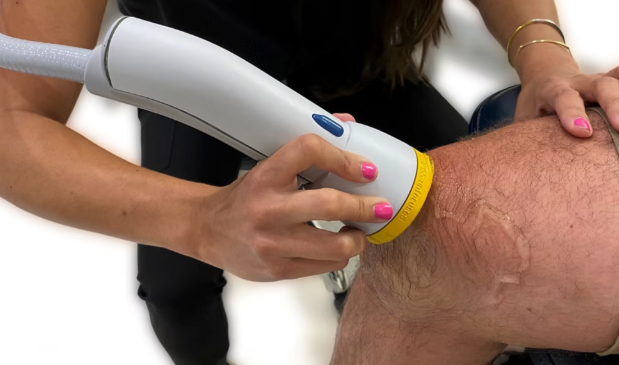
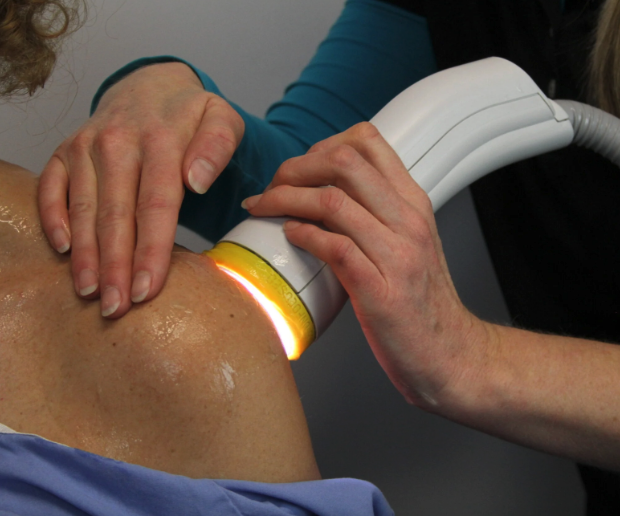
Sessions run 5 to 15 minutes. There are no needles, no anesthesia, and no required recovery window afterward. The device is applied directly to the skin over the affected area, and most people describe the sensation as mild pulsing or pressure. Over areas of significant tissue damage, it can be more noticeable, but the brevity of each session means even cases with some discomfort involve a short window.
Before treatment begins, the practitioner uses biofeedback scanning, which is a real-time tissue assessment that identifies the precise location of structural dysfunction. The reason this matters: pain location and injury location aren't always the same place. Treating where symptoms appear rather than where structural damage actually lives is one of the most consistent reasons conventional care produces incomplete results.
Improvement builds across the treatment course, with peak biological change occurring in the 8 to 12 weeks that follow. New blood vessels form. Endogenous stem cells produce structural repair proteins. The resolution phase that was stalled finally completes. What you notice at week ten reflects actual tissue change, not a chemical effect wearing off.
A Typical Case: What This Looks Like in Practice
Consider a recreational runner who develops Achilles tendinopathy. They rest, begin physical therapy, return to activity too early, and re-aggravate the tendon. After cycling through this pattern across a full year, the tissue has developed chronic degenerative changes. The window for a simpler intervention has quietly closed, and what's now present is a failed healing cycle rather than an acute injury.
This is the presentation SoftWave Therapy East Cobb sees most often: a patient who has already done the expected things, already been told to rest and stretch and strengthen, and is still in the same place. The stalled repair cycle is the actual clinical problem. Addressing the symptom layer again produces the same incomplete result.
Comparing Your Real Options
The expensive choice isn't SoftWave Therapy. It's another cycle of partial treatment that leaves the structural problem in place while surrounding tissue continues adapting around it.
Who This Is and Isn't the Right Fit For
Honest framing matters here.
SoftWave Therapy isn't appropriate for complete structural ruptures that require surgical repair, active infections in or near the treatment area, or pregnancy. These conditions need a different clinical path. The therapy is designed to support tissue that needs regenerative activation, not structural instability that requires mechanical reconstruction.
It's also worth saying plainly: results vary. The shock wave therapy literature indicates that a meaningful minority of musculoskeletal candidates see limited improvement. A condition's severity, how long it has been present, and whether the biomechanical factors driving it are also being addressed all affect outcomes. SoftWave Therapy isn't a standalone solution if the movement pattern or loading condition that caused the injury continues unchanged.
Where it tends to produce its strongest results: chronic musculoskeletal conditions stuck in a failed healing cycle, and patients working to avoid or delay surgery for conditions like plantar fasciitis, shoulder tendinopathy, hand or knee pain, and persistent back pain. If you've been through multiple rounds of conventional care without lasting resolution, your situation is often exactly what this approach is designed for.
Frequently Asked Questions
How do I know whether my condition is a strong candidate for SoftWave Therapy?
The biofeedback scanning process at SoftWave Therapy East Cobb is designed to answer that question before you commit to anything. The Discovery Day session includes a real-time tissue assessment so the practitioner can identify whether your presentation fits what SoftWave Therapy addresses well, based on your actual anatomy, not a general diagnosis list.
I've already had cortisone shots and physical therapy without lasting results. Is SoftWave still an option?
In many cases, yes. SoftWave works at the tissue repair level regardless of prior treatment history. Patients who've cycled through multiple rounds of conventional care without durable relief are often the strongest candidates precisely because their injuries are stuck in the kind of failed healing cycle that cellular activation is built to address.
Will the sessions hurt?
Most people describe mild pulsing or pressure. Over areas of significant tissue damage, the sensation can be more noticeable. Because sessions run between 5 and 15 minutes, even cases with some discomfort involve a short window, and no anesthesia or numbing is required.
How many sessions will I need?
It depends on the condition and how long it's been present. The biofeedback assessment gives a much clearer picture of treatment scope than a general estimate can. Many people notice initial shifts in the days following their first session. Substantial structural improvement builds across the treatment course, with peak results typically emerging 8 to 12 weeks after the final session.
Is SoftWave covered by insurance?
SoftWave Therapy isn't covered by traditional insurance plans. HSA and FSA funds can be applied, which makes it accessible for patients who've set aside pre-tax healthcare dollars. The Discovery Day session is available for $69 and allows you to assess fit and candidacy before committing to a full program.
What makes SoftWave's technology different from other shock wave devices?
The electrohydraulic parabolic reflector generates a true unfocused shock wave that penetrates a broader tissue area than focused devices. The depth and breadth of wave penetration determines how much tissue the treatment actually reaches. Not all shock wave equipment produces the same biological effect, and this delivery mechanism is specific to the technology SoftWave uses across its 46 patented technologies.
Can I use SoftWave alongside physical therapy I'm already doing?
In many cases, yes. Because SoftWave operates at the tissue regeneration level rather than the symptom suppression level, it tends to complement rehabilitative work rather than conflict with it. The biofeedback assessment helps clarify what combination makes sense for your specific condition and where you are in the recovery timeline.
If you're ready to find out whether your condition is a strong fit for tissue regeneration without injections, medication, or surgery, the Discovery Day session at SoftWave Therapy East Cobb is where to start. You'll get a real-time tissue assessment, a clear picture of what's actually driving your pain, and a direct answer on whether SoftWave is the right next step for you.
About the Author
SoftWave Therapy East Cobb is run by Dr. Paul Drilling, DC, a chiropractor who has practiced for 27 years in the Atlanta Area. Softwave East Cobb is located in the Marietta, Georgia area specializing in non-invasive acoustic shock wave therapy for musculoskeletal pain and injury. They work with athletes, active adults, and chronic pain patients to address the root causes of pain through FDA-cleared electrohydraulic technology, without injections, drugs, or surgery. Their approach combines biofeedback scanning with 46 patented technologies to deliver targeted tissue regeneration with sessions as short as 5 to 15 minutes. Softwave East Cobb is located within 12 minutes of Roswell and Sandy Springs, Georgia.
‹ Back
 1000 Johnson Ferry Road