
Blog
How to Actually Heal Musculoskeletal Pain: A Step-by-Step Guide to SoftWave Therapy

Chronic pain doesn't announce itself with a dramatic moment. It accumulates. A shoulder that won't fully rotate. A knee that makes you think twice before stairs. A back that's been "almost fine" for two years. According to the Centers for Disease Control and Prevention, nearly 50 million adults in the United States experience chronic pain (CDC). That number doesn't capture the people who've simply stopped expecting to feel better.
Direct Answer
SoftWave Therapy treats musculoskeletal pain by delivering electrohydraulic acoustic shock waves through a parabolic reflector to damaged tissue, triggering the body's own cellular repair mechanisms. It activates endogenous stem cells, increases blood flow, and reduces inflammation without injections, drugs, or surgery. Sessions run 5 to 15 minutes, and peak results typically occur 8 to 12 weeks after treatment.
Key Takeaways
-
SoftWave Therapy uses electrohydraulic acoustic shock wave technology to activate your body's natural healing processes at the cellular level, not just mask pain signals
-
Sessions take 5 to 15 minutes, and many people notice some improvement after the session.
-
Peak results build over 8 to 12 weeks as tissue regeneration continues after each session
-
The Discovery Day session at SoftWave Therapy East Cobb costs $69 and includes biofeedback scanning to confirm whether you're a candidate before committing to a full plan
-
HSA and FSA funds are accepted; this treatment is not covered by insurance
Why Does Pain That "Should Have Healed" Keep Coming Back?
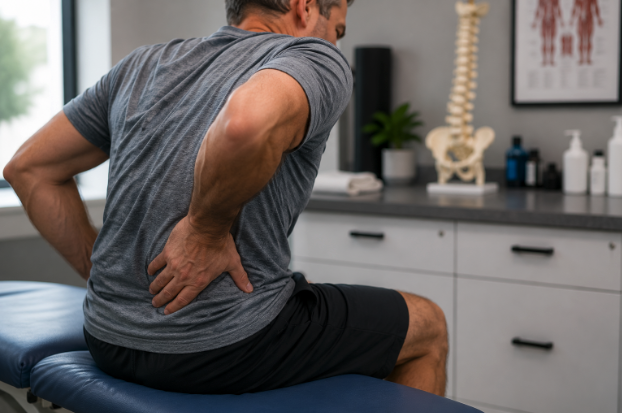
Most musculoskeletal pain isn't a mystery. You know roughly what started it. What's harder to explain is why it's still there six months later, even after rest, physical therapy, and anti-inflammatories.
The real problem isn't that your body can't heal. It's that damaged tissue in tendons, joints, and fascia has poor blood supply to begin with. When circulation is compromised further by injury or chronic inflammation, the cellular repair signals that should arrive simply don't. The tissue stays in a low-grade damaged state, producing pain without progressing toward recovery.
Waiting for this kind of pain to resolve on its own is not a neutral choice. Restricted movement leads to compensatory patterns. Compensatory patterns create new injuries. The shoulder problem becomes a neck problem. The knee problem becomes a hip problem.
That's the cycle most chronic pain patients are actually living inside, not a single injury but a spreading system of adaptations to unresolved damage.
What Makes SoftWave Therapy Different From Other Pain Treatments?
The category reframe here matters: SoftWave Therapy isn't a pain management tool. It's a tissue regeneration tool that happens to resolve pain as a downstream effect.
Pain management, whether through medication, injections, or passive physical therapy, works by interrupting the pain signal. That's useful in the short term. But it doesn't change the underlying tissue state. SoftWave Therapy works by changing the tissue itself.
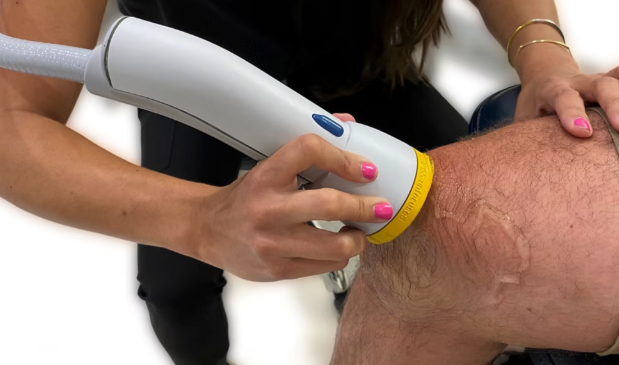
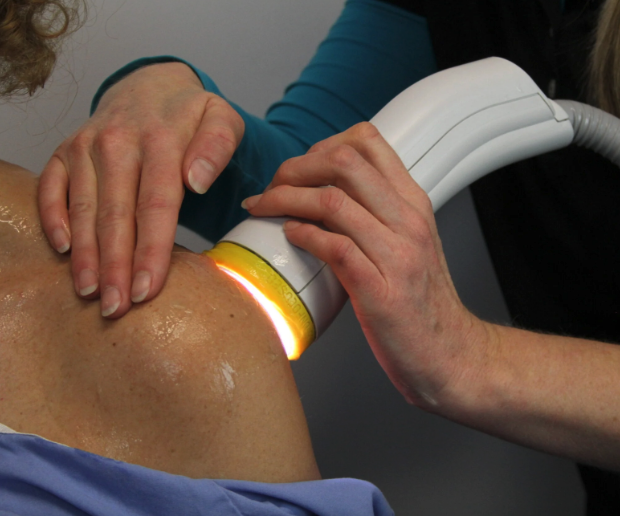
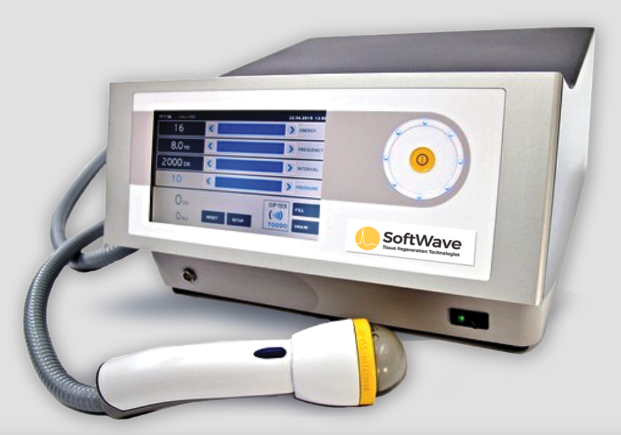
Here's the mechanism. The electrohydraulic acoustic shock wave system at SoftWave Therapy East Cobb generates acoustic waves through a parabolic reflector, focusing energy precisely into damaged tissue. At the cellular level, this does three things:
-
SoftWave therapy delivers acoustic waves into the tissue without causing microtrauma or damage. This stimulates the body’s natural healing response, encouraging repair and recovery in the treated area.
-
It stimulates angiogenesis, the formation of new blood vessels, restoring circulation to tissue that was functionally cut off
-
It activates endogenous stem cells, meaning stem cells already present in your body, which migrate to the injury site and begin rebuilding damaged structures
This is why results continue building after treatment ends. The healing process has been restarted, not just suppressed.
SoftWave Therapy East Cobb uses technology backed by 46 patented technologies and a reported effectiveness rate of 65 to 91% across musculoskeletal conditions. That range is honest: not everyone responds identically, and the protocol acknowledges that upfront.
How Do You Know If You're Actually a Candidate?
This is the question most people don't think to ask. They assume they either need treatment or they don't. The reality is more specific.
SoftWave Therapy East Cobb uses biofeedback scanning before committing you to a treatment plan. Biofeedback scanning is a pre-treatment assessment process that identifies areas of tissue dysfunction and confirms whether your condition is likely to respond to electrohydraulic acoustic shock wave therapy. It's not a formality. It's the difference between a treatment plan built around your actual tissue state and a generic protocol.
The Discovery Day session exists for exactly this reason. For $69, you get the scan, a consultation, and a first treatment if you're a confirmed candidate. You leave knowing whether this is the right path, not guessing.
If you've been managing pain for months without a clear answer on what's actually happening at the tissue level, that's the right next step: book a Discovery Day at SoftWave Therapy East Cobb and get a real baseline.
What Should You Realistically Expect, and When?
Here's what the timeline actually looks like for most people:
Within 15 to 20 hours after a session, many patients notice a measurable decrease in pain and swelling. This isn't the full result. It's the first signal that the repair cascade has started.
Over the following weeks, tissue regeneration continues between sessions. The 8 to 12 week window is when peak results typically appear, because that's how long it takes for new blood vessel formation and stem cell activity to meaningfully rebuild damaged structures.
A typical scenario: someone with chronic plantar fasciitis who's tried orthotics, cortisone injections, and months of stretching without lasting relief. After a series of SoftWave sessions, the pain that had been a daily 6 out of 10 drops progressively over two months, not because the pain signal was blocked, but because the fascial tissue itself has begun to repair. By week ten, morning steps that were previously the worst part of the day are no longer an event.
That's the pattern. Not instant. Not guaranteed. But mechanistically grounded in what's actually happening to the tissue.
SoftWave Therapy vs. Doing Nothing: The Real Cost
The instinct to wait is understandable. Pain fluctuates. Some weeks feel better. It's easy to believe recovery is happening when it's actually just varying.
The cost of waiting isn't just continued pain. It's the secondary injuries that develop from compensating. It's the loss of athletic conditioning while you protect a joint. It's the erosion of confidence in your own body that happens when pain becomes a constant background variable.
The most expensive treatment decision isn't choosing SoftWave Therapy. It's choosing a cycle of symptom management that never closes the loop on actual healing.
The Healing Readiness Framework: A Simple Self-Assessment
The Healing Readiness Framework is a four-question self-assessment to determine whether SoftWave Therapy is the right fit for your current situation.
Use it when you're deciding whether to book a Discovery Day. It's not a clinical diagnosis. It's a decision filter.
Question 1: Has the pain persisted for more than six weeks despite rest or standard treatment? If yes, the tissue is not self-resolving. Passive approaches have had their chance.
Question 2: Is the pain limiting a specific physical activity you want to return to? If yes, there's a functional goal, not just pain reduction, which makes the 8 to 12 week outcome window concrete and measurable.
Question 3: Have you already tried injections or medications without lasting relief? If yes, the symptom-management pathway has been tested. You're not skipping a step.
Question 4: Are you willing to invest in a treatment that works with your body's biology rather than overriding it? If yes, the mechanism of SoftWave Therapy aligns with what you're actually looking for.
Three or four "yes" answers means you're a strong candidate for the Discovery Day session. One or two means the conversation is still worth having, but the biofeedback scan will tell you more than this framework can.
Who Is SoftWave Therapy Not Right For?
Straight talk builds more trust than a pitch that promises everything.
SoftWave Therapy isn't appropriate for people with active infections, blood clots, active tumors or a pacemaker at the treatment site,certain blood clotting disorders or those who are pregnant. It's also not the right fit if you're looking for same-day resolution of an acute injury, because the regenerative process takes time by definition. The biology doesn't compress.
It also doesn't replace surgery in cases where structural damage is severe enough to require mechanical correction. If you have a complete tendon rupture or a joint that needs reconstruction, SoftWave Therapy can support recovery but can't substitute for the structural repair itself.
What it does exceptionally well is address the large middle ground where most musculoskeletal pain actually lives: chronic conditions that haven't responded to conservative care, partial injuries that haven't healed, and inflammatory patterns that keep cycling without resolution.
FAQ
How many sessions do I actually need before I see results?
Most people notice something within 15 to 20 hours after their first session, but a meaningful course of treatment typically involves multiple sessions spaced over several weeks. The exact number depends on the condition, its severity, and how your tissue responds, which is why the biofeedback scan at the Discovery Day is so useful. You'll have a clearer picture after that initial assessment than any general estimate can give you.
Is the $69 Discovery Day a real first treatment or just a sales consultation?
It's both a clinical assessment and a real first treatment if the biofeedback scan confirms you're a candidate. You get the scan, a consultation about your specific condition, and a treatment session in the same visit. The $69 price exists because SoftWave Therapy East Cobb wants you to experience the therapy and understand whether it's right for you before committing to a full plan.
Will this hurt during the session?
Most patients describe the sensation as a mild tapping or pressure during the 5 to 15 minute session. Some areas of significant tissue damage may be more sensitive initially. The intensity is adjustable, and the biofeedback process helps identify exactly where to focus the treatment, which also helps calibrate the experience to what you can tolerate comfortably.
Can I use my HSA or FSA to pay for SoftWave Therapy?
Yes. SoftWave Therapy East Cobb accepts HSA and FSA payments. The therapy is not covered by standard health insurance, but HSA and FSA accounts are a straightforward way to use pre-tax dollars for the treatment.
What conditions does SoftWave Therapy actually treat?
SoftWave Therapy is used across a wide range of musculoskeletal conditions including plantar fasciitis, tendinopathies, rotator cuff injuries, knee pain, hip pain, back pain, and neuropathy-related conditions. The electrohydraulic acoustic shock wave mechanism works on any tissue where poor circulation and cellular repair deficits are driving the problem, which covers most chronic musculoskeletal pain patterns.
How is this different from ultrasound therapy or TENS?
Ultrasound therapy and TENS devices work primarily on surface-level tissue and nerve signal interruption respectively. SoftWave Therapy uses electrohydraulic acoustic shock waves focused through a parabolic reflector to reach deeper tissue layers and trigger actual cellular regeneration, including stem cell activation and new blood vessel formation. The mechanism is fundamentally different: it's not modulating a signal, it's restarting a biological process.
What happens if I don't respond to treatment?
The 65 to 91% effectiveness rate is real, which means a percentage of patients don't achieve the expected outcome. If you're not responding, the clinical team at SoftWave Therapy East Cobb will reassess. The biofeedback scanning process is designed to identify strong candidates upfront, which reduces the likelihood of investing in a full course of treatment that isn't working. No treatment in regenerative medicine carries a universal guarantee, and any provider who tells you otherwise isn't being straight with you.
The body already knows how to heal. The question is whether the conditions for healing are actually present. SoftWave Therapy East Cobb doesn't override your biology. It restores the cellular environment your biology needs to do what it was built to do.
If you've been managing pain instead of resolving it, the Discovery Day session is a $69 answer to a question you've probably been carrying for months. Book yours at SoftWave Therapy East Cobb and find out exactly what's happening in your tissue and what it would take to change it.
About the Author
SoftWave Therapy East Cobb is run by Dr. Paul Drilling, DC, a chiropractor who has practiced for 27 years in the Atlanta Area. Softwave East Cobb is located in the Marietta, Georgia area specializing in non-invasive acoustic shock wave therapy for musculoskeletal pain and injury. They work with athletes, active adults, and chronic pain patients to address the root causes of pain through FDA-cleared electrohydraulic technology, without injections, drugs, or surgery. Their approach combines biofeedback scanning with 46 patented technologies to deliver targeted tissue regeneration with sessions as short as 5 to 15 minutes. Softwave East Cobb is located within 12 minutes of Roswell and Sandy Springs, Georgia.
References
Centers for Disease Control and Prevention - chronic pain prevalence among U.S. adults
World Health Organization via PMC - global prevalence of chronic musculoskeletal pain
‹ Back
 1000 Johnson Ferry Road