
Blog
Does SoftWave Therapy Hurt? What Treatment Actually Feels Like

Does SoftWave Therapy Hurt? An Honest Answer for East Cobb Patients
It is one of the first questions people ask when they call about shockwave therapy, and it deserves a straight answer instead of a marketing one. If you have been living with a stubborn knee, shoulder, hip, or foot problem for months or years, you have probably already tried something that hurt more than it helped. You are cautious now, and you should be. So before you book anything, you want to know exactly what is going to happen to your body when the applicator touches your skin.
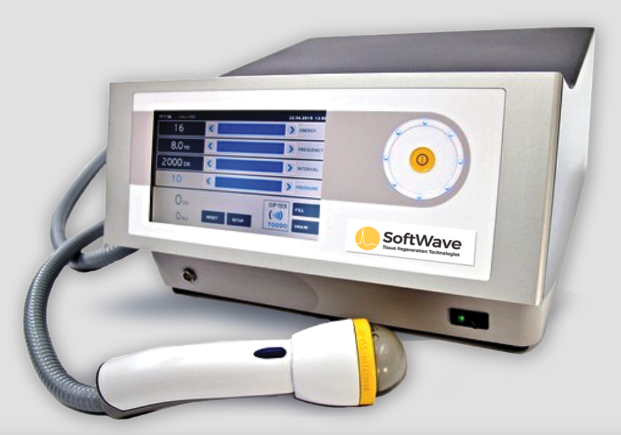
At SoftWave East Cobb, Dr. Paul Drilling, DC, works with patients across Marietta and Cobb County who arrive with that same question. SoftWave Tissue Regeneration Technology (TRT) is a non-invasive treatment that uses broad-focused acoustic waves to reach deep into injured tissue and prompt the body's own repair response. There are no needles, no drugs, no incisions, and no anesthesia. Most people describe the sensation as surprising rather than painful, and the honest full answer is a little more interesting than a simple yes or no.
What SoftWave Actually Feels Like
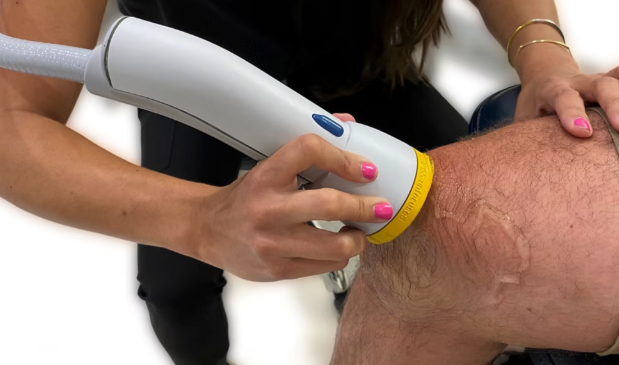
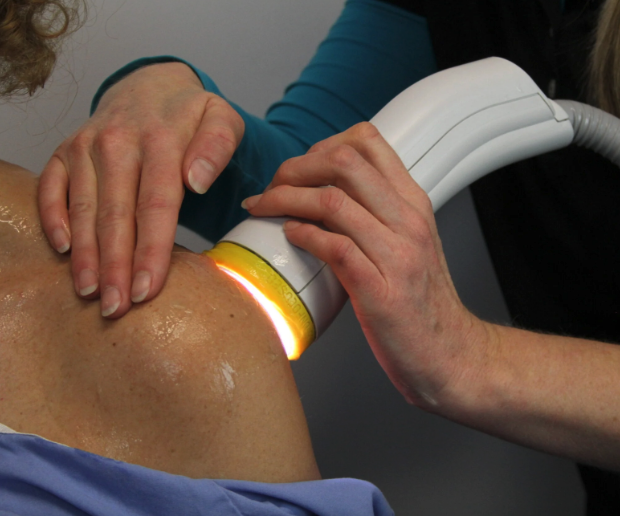
The applicator is placed against your skin with a small amount of gel, and the device delivers rapid acoustic pulses into the tissue underneath. The most common description patients give is a firm tapping or pulsing, a bit like someone drumming a fingertip quickly and steadily against the area. Some people compare it to a deep percussive massage. There is a distinct clicking sound from the device, which catches people off guard more often than the sensation itself does.
Over healthy tissue, that tapping usually registers as pressure and nothing more. Over tissue that is inflamed, scarred, or degenerated, it can feel noticeably more tender. That contrast is not a malfunction, and it is not a sign that something is going wrong.
Why the Sensitive Spots Matter
One of the more useful features of this treatment is that the areas that feel most tender are frequently the areas that need attention. Patients often walk in pointing at one spot and discover during treatment that the tissue an inch or two away lights up far more. Dr. Drilling uses that feedback as a live map. Instead of guessing, he can trace the tender zones and concentrate the waves where the tissue is actually struggling.
People sometimes describe this as a good sore, similar to pressing on a knot that you know needs to be worked out. It is informative discomfort, not injury, and it typically fades within seconds of the applicator moving on.
The Intensity Is Adjustable
This is the part that resolves most of the worry. Energy level, pulse frequency, and the number of pulses per area are all controlled by the provider and can be dialed up or down at any moment during the session. Nobody is asking you to grit your teeth and endure it. If a spot is too intense, you say so, the setting comes down, and the session continues comfortably.
Many patients also find that sensitivity drops off across a treatment series. An area that felt sharp in the first session often feels merely firm by the third or fourth, which many people take as an encouraging sign that the tissue is changing.
How SoftWave Helps
SoftWave TRT is the only broad-focused shockwave technology available. It uses an electrohydraulic, spark-generated wave shaped by a patented parabolic reflector, which spreads energy over a wide treatment zone while still reaching deep structures. Radial devices disperse energy superficially and unevenly, electromagnetic devices lose energy quickly and lack depth, and piezoelectric devices focus energy at a single point, which limits the area they can treat. The broad-focused approach is a large part of why the sensation is a spread out tapping rather than a concentrated jab.
Researchers have described several mechanisms behind how these waves interact with tissue. In plain language, the treatment is designed to:
- Activate resident stem cells and encourage them to migrate toward damaged tissue
- Support angiogenesis, the formation of new blood vessels, through pathways involving VEGF and eNOS
- Stimulate cell proliferation and collagen activity through factors such as PCNA and BMP
- Modulate the inflammatory process rather than simply masking it
- Influence toll-like receptor regulation as part of the healing cascade
- Assist the clearance of senescent cells that are no longer contributing to repair
These are researched mechanisms, not promised outcomes, and results vary from person to person. What matters for your question is that none of these processes require the treatment to hurt in order to work. The goal is to deliver enough energy to the right depth, not to push your tolerance.
If the fear of pain has been the thing keeping you from finding out whether this could help, the simplest fix is to come see for yourself. Schedule a SoftWave Therapy Discovery Day at our Marietta office and experience a session firsthand with a provider who will adjust the settings to your comfort.
Comparing the Experience to Other Options
Injections and surgical procedures have their place, and many patients in East Cobb have benefited from both under the care of excellent physicians. The honest comparison is simply about what the day feels like. An injection involves a needle entering the joint or soft tissue, often with a period of soreness afterward and sometimes a limit on how many can be done in a year. A surgical procedure involves anesthesia, incisions, a recovery window, and usually a course of rehabilitation before you are back to normal activity.
SoftWave sessions run roughly ten to fifteen minutes. You stay fully awake and clothed except for the area being treated. You walk out and drive yourself home. There is no downtime, no bandage, no prescription to fill, and no restriction on returning to work that afternoon. For people who want to try a conservative approach before considering more invasive care, that difference in the experience is often the deciding factor.
The Hours and Days After Treatment
Most patients report feeling normal within minutes of getting off the table, and a good number notice a temporary reduction in pain or an easier range of motion the same day. That early change often comes and goes over the following days, which is expected while deeper tissue work is still underway.
Some people feel mild soreness in the treated area for a day or so, similar to the feeling after a solid workout or a deep tissue massage. Occasionally there is slight redness or warmth over the skin, which typically settles quickly. Serious side effects are uncommon with this kind of non-invasive care, and Dr. Drilling will review your history and anything specific to your situation before you begin.
Progress Builds Over a Series
SoftWave is not usually a one-and-done treatment. A typical plan runs as a series of sessions over roughly six to eight weeks. Because the therapy works by prompting your body's own regenerative processes, healing may continue for weeks or months after your final visit. Improvement tends to arrive gradually rather than all at once, and tracking how you feel week to week gives a clearer picture than judging any single day.
Ready to Take the Next Step?
If worry about pain has been holding you back, know that the treatment is adjustable, brief, and free of needles and downtime. A short conversation with Dr. Drilling can tell you what your session would actually feel like and whether SoftWave is a reasonable fit for your condition.
Request your SoftWave Therapy Discovery Day online today
Contact SoftWave East Cobb
SoftWave East Cobb
1000 Johnson Ferry Road, Suite D-100
Marietta, GA 30068
Phone: (404) 775-3988
Office Hours: Monday and Tuesday 9:00am to 2:00pm, Thursday 12:00pm to 6:30pm
‹ Back

 1000 Johnson Ferry Road