
Blog
SoftWave Therapy vs. Other Pain Treatments: An Honest Comparison for People Who Are Done Guessing
Chronic pain has a way of turning you into a reluctant expert. You've probably tried something, gotten partial relief, and then found yourself right back where you started, wondering whether the next treatment will actually address what's wrong or just manage how bad it feels.
That question deserves a straight answer.
Direct Answer
SoftWave Therapy is a non-invasive shock wave treatment that uses electrohydraulic technology to stimulate your body's own repair processes at the cellular level, including stem cell activation and increased blood flow. Compared to injections, physical therapy, and surgery, it offers a faster session time (5 to 15 minutes), no recovery period, and a 65 to 91 percent effectiveness rate for musculoskeletal conditions, with peak results typically appearing 8 to 12 weeks post-treatment.
Key Takeaways
-
SoftWave Therapy works by triggering biological repair mechanisms, not by masking pain signals
-
Sessions run 5 to 15 minutes with no downtime, making it practical for working adults and active people
-
Peak results occur 8 to 12 weeks after treatment, not immediately, and that timeline is by design
-
A Discovery Day session at SoftWave Therapy East Cobb starts at $69 and includes biofeedback scanning to confirm you're a candidate before committing
-
HSA and FSA funds are accepted; standard insurance does not cover this treatment
Why Does Pain Keep Coming Back Even After Treatment?
Most pain treatments are designed around symptom suppression. That's not a criticism, it's just what they were built to do.
Cortisone injections reduce inflammation at the injection site. NSAIDs block the chemical signals your body uses to register pain. Physical therapy strengthens the muscles around an injured structure. These approaches can absolutely help. But none of them tell your body to repair the damaged tissue itself.
The root cause of recurring musculoskeletal pain is almost always tissue-level dysfunction that the body hasn't been given the right signal to fix. Tendons with micro-tears, cartilage with poor circulation, fascia that's become rigid after injury, these structures don't heal well on their own because they have limited blood supply to begin with.
When the repair signal never arrives, the injury stays in a low-grade chronic state. You manage it. You work around it. It flares up again.
This is the structural reason why so many people cycle through treatment after treatment without resolution. It's not that the treatments failed. It's that they were solving a different problem.
What Is SoftWave Therapy Actually Doing at the Cellular Level?
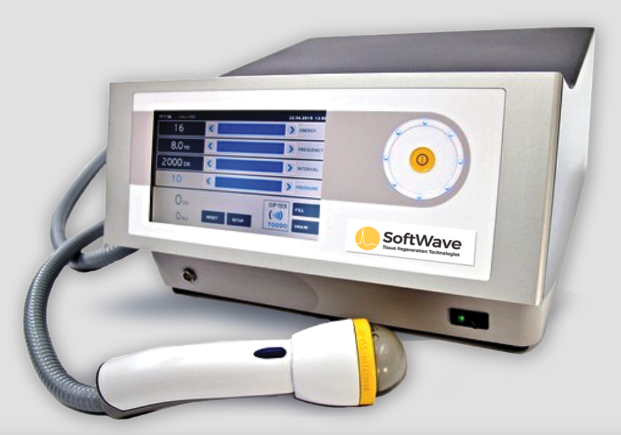
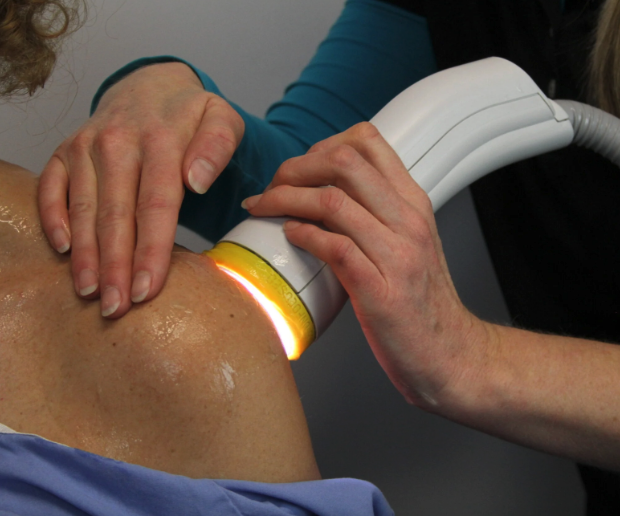
SoftWave Therapy is an electrohydraulic shock wave treatment that delivers acoustic energy into damaged tissue using a parabolic reflector, which focuses the wave precisely where it needs to go.
That acoustic energy does several things simultaneously. It increases local blood flow to tissue that's been starved of circulation. It reduces inflammation by disrupting the inflammatory cycle rather than chemically suppressing it. And it activates endogenous stem cells, meaning stem cells already present in your body that haven't been recruited to the repair site yet.
Endogenous stem cell activation is the mechanism that separates SoftWave from most other treatments. Your body already has the repair capacity. SoftWave Therapy gives it the signal to deploy.
This is also why results don't peak immediately. The 8 to 12 week timeline isn't a delay. It's the biology. Tissue regeneration takes time, and the treatment is initiating a process, not delivering a result.
If you're asking what happens after a session, the answer is: your body keeps working. Most people notice a meaningful decrease in pain and swelling within 15 to 20 hours after treatment. The deeper structural repair continues over the following weeks.
How Does SoftWave Compare to the Alternatives You're Already Considering?
The honest tradeoff: SoftWave Therapy requires multiple sessions, results aren't instant, and it isn't covered by insurance. But it's the only option in this table that's simultaneously non-invasive, non-drug, non-injection, and targeting the biological repair process directly.
Surgery can fix structural problems that SoftWave can't. If you have a fully ruptured tendon or severe spinal stenosis requiring decompression, that's a different conversation. But for the broad middle ground of musculoskeletal pain, including tendinopathy, plantar fasciitis, shoulder injuries, knee pain, and chronic back pain, waiting for surgery-level intervention is often the most expensive decision you can make.
Waiting doesn't preserve your options. It narrows them.
If you're at the point where you're comparing options seriously, the Discovery Day at SoftWave Therapy East Cobb is the lowest-risk next step. For $69, you get a biofeedback scan that confirms whether you're a candidate before you commit to anything further.
What Does the Treatment Actually Feel Like? (And Who Gets Results?)
Consider a typical case: an active adult in their 40s with chronic Achilles tendinopathy who's tried physical therapy and two rounds of cortisone injections. The injections provided temporary relief, but the pain returned within a few months each time. Physical therapy helped with strength but didn't resolve the underlying tendon degeneration.
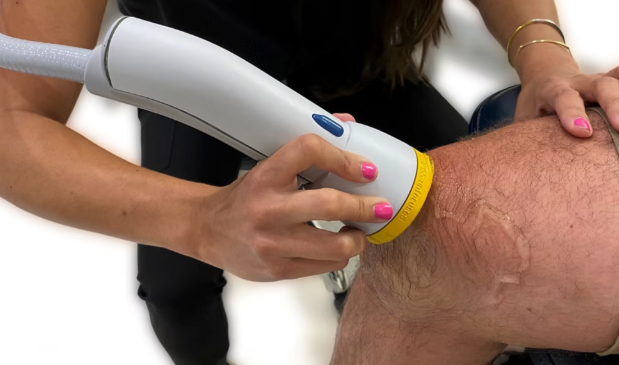
In a situation like this, SoftWave Therapy addresses the tissue itself. The session takes less than 15 minutes. There's a sensation during treatment, often described as a mild pulsing or tapping, but no anesthesia is needed and there's no recovery period afterward. Most people return to normal activity the same day.
The biofeedback scanning process at SoftWave Therapy East Cobb is worth understanding specifically. Before treatment begins, scanning is used to identify the precise location of dysfunction. This isn't a general area treatment. It's targeted to where the tissue is actually compromised, which is part of why the 65 to 91 percent effectiveness rate for musculoskeletal conditions holds across a range of diagnoses.
The treatment works best for people with documented tissue-level injury, not just general soreness. That distinction is why the candidate assessment matters.
Who Is This Not the Right Fit For?
Straight talk: SoftWave Therapy isn't the right starting point for every situation.
If you have an acute fracture, active infection, or a condition requiring immediate surgical intervention, SoftWave isn't a substitute for that care. It's also not appropriate during pregnancy for troubled areas near the fetus.. People with certain implanted devices or active malignancies near the treatment area need medical clearance first.
SoftWave Therapy also isn't a one-session fix. If you're looking for immediate, same-day resolution, the biology doesn't support that expectation. The repair process takes weeks. That's not a limitation of the technology. That's how tissue regeneration works in the human body.
And if your pain is purely neurological in origin rather than musculoskeletal, the response may be different. The biofeedback assessment at SoftWave Therapy East Cobb is specifically designed to identify who's likely to benefit before you invest in a full treatment plan.
The most expensive mistake in pain management isn't choosing the wrong treatment. It's continuing a treatment that isn't working because you haven't confirmed whether you're actually a candidate for something better.
Ready to find out whether SoftWave Therapy is the right fit for your specific condition? The Discovery Day at SoftWave Therapy East Cobb is $69 and includes a biofeedback scan so you know before you commit. Schedule yours at softwaveeastcobb.com.
FAQ
How many sessions will I need before I see results?
Most people begin noticing changes within 15 to 20 hours after their first session, but the full benefit builds over 8 to 12 weeks as tissue regeneration progresses. The number of sessions varies depending on the condition and its severity, which is why the initial assessment at SoftWave Therapy East Cobb is designed to map out a realistic plan before treatment starts.
Is SoftWave Therapy painful during the session?
Most people describe the sensation as a mild pulsing or tapping at the treatment site. It's not painless, but it doesn't require numbing or anesthesia, and sessions are short enough (5 to 15 minutes) that discomfort is brief. The intensity can be adjusted based on your tolerance.
Why isn't this covered by insurance if it's FDA-cleared?
FDA clearance and insurance coverage are separate processes. SoftWave Therapy has FDA clearance as a medical device, but insurance reimbursement is determined by individual payer policies, and most haven't yet added it to their covered treatments. HSA and FSA funds can be applied, which reduces the out-of-pocket cost for many patients.
Can SoftWave Therapy help if I've already had surgery on the same area?
In many cases, yes. Post-surgical tissue can develop scar tissue, reduced circulation, and chronic inflammation that SoftWave's regenerative mechanism can address. Whether you're a good candidate depends on the type of surgery, how long ago it was, and your current tissue condition. The biofeedback scan at SoftWave Therapy East Cobb will give you a clear answer specific to your situation.
How is SoftWave different from the ultrasound therapy I've already tried?
Standard therapeutic ultrasound works primarily through thermal effects, warming tissue to increase circulation. SoftWave uses electrohydraulic shock waves focused through a parabolic reflector, which generates a different kind of mechanical energy that triggers stem cell activation and cellular repair. The mechanism is more specific and operates at a depth and intensity that standard ultrasound doesn't reach.
What conditions respond best to SoftWave Therapy?
Research and clinical use show strong results for tendinopathies (Achilles, patellar, rotator cuff), plantar fasciitis, chronic back and neck pain, knee osteoarthritis, and soft tissue injuries. Neuropathy patients and people with joint pain from overuse or aging are also commonly treated. The 65 to 91 percent effectiveness rate cited for musculoskeletal conditions reflects a broad range of diagnoses, not a single specialty area.
What happens at the Discovery Day session?
The Discovery Day at SoftWave Therapy East Cobb is a $69 introductory session that includes a biofeedback scan to identify where tissue dysfunction is occurring and whether you're a good candidate for treatment. It's designed to give you real information about your condition and a clear picture of what a treatment plan would look like, without requiring you to commit to anything beyond that first visit.
The pain management category is full of treatments that work on paper and underdeliver in practice. SoftWave Therapy East Cobb takes a different position: confirm candidacy first, treat the tissue directly, and let the biology do the work over the weeks that follow. That's not a promise of perfection. It's a process built around how the body actually heals.
About the Author
SoftWave Therapy East Cobb is run by Dr. Paul Drilling, DC, a chiropractor who has practiced for 27 years in the Atlanta Area. Softwave East Cobb is located in the Marietta, Georgia area specializing in non-invasive acoustic shock wave therapy for musculoskeletal pain and injury. They work with athletes, active adults, and chronic pain patients to address the root causes of pain through FDA-cleared electrohydraulic technology, without injections, drugs, or surgery. Their approach combines biofeedback scanning with 46 patented technologies to deliver targeted tissue regeneration with sessions as short as 5 to 15 minutes. Softwave East Cobb is located within 12 minutes of Roswell and Sandy Springs, Georgia.
‹ Back
 1000 Johnson Ferry Road