


Blog
What Actually Happens Inside Your Body During SoftWave Therapy (And Why Most Providers Don't Explain It)
Chronic pain has a way of making you feel like your body has simply stopped cooperating. You've tried the injections, the anti-inflammatories, maybe a round or two of physical therapy, and the relief either didn't come or didn't last. That's not a personal failure. It's a sign the treatments were managing symptoms rather than addressing what's actually broken at the tissue level.
SoftWave Therapy works differently. Not just in method, but in biological mechanism. Here's what that actually means.
Direct Answer: How Does SoftWave Therapy Actually Work?
SoftWave Therapy delivers unfocused electrohydraulic acoustic shock waves through a parabolic reflector applicator, creating controlled acoustic pressure that reaches damaged tissue. This triggers a cellular repair cascade: improved blood flow, reduced inflammation, and activation of the body's endogenous stem cells. Sessions run 5 to 15 minutes. Peak healing results typically emerge 8 to 12 weeks after treatment.
Key Takeaways
-
SoftWave uses electrohydraulic technology with a parabolic reflector to produce true unfocused shock waves, different from standard ultrasound or focused ESWT devices
-
The therapy works by triggering your body's own repair mechanisms at the cellular level, not by masking pain signals
-
Biofeedback scanning identifies whether you're a good candidate before treatment begins
-
Sessions take 5 to 15 minutes; peak results typically appear 8 to 12 weeks after treatment
-
SoftWave Therapy East Cobb offers a Discovery Day session at $69 so you can experience the treatment before committing to a full protocol
Why Does Pain Keep Coming Back Even After Treatment?
Most pain management approaches target the signal, not the source. Corticosteroid injections suppress inflammation locally. NSAIDs block prostaglandin production. Physical therapy builds compensatory strength around a damaged structure. These aren't wrong choices, but they share a common limitation: they don't restore the underlying tissue.
The real problem isn't that you're feeling pain. It's that the tissue generating that pain signal hasn't been repaired.
Degenerated tendons, cartilage with reduced proteoglycan content, fascia with chronic micro-tears, nerves with compromised myelin sheaths, these structures don't heal well on their own once the acute injury phase has passed. The body's repair resources get redirected. Circulation to the area decreases. Stem cell activity at the site drops off. The damage becomes chronic not because healing is impossible, but because the biological conditions for healing are no longer present.
This is the root cause that most treatments never touch.
What Is the Biological Mechanism Behind Shock Wave Therapy?
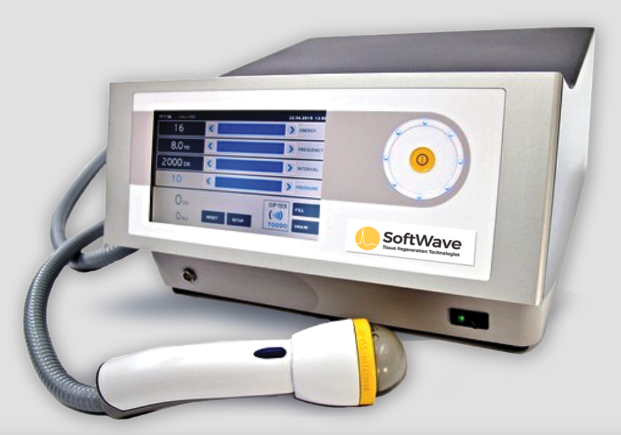
Electrohydraulic shock wave technology is a method of generating acoustic pressure waves through a water-filled ellipsoidal reflector, producing an unfocused wave front that penetrates tissue at depth rather than concentrating energy at a single focal point.
That distinction matters mechanically. Focused devices target a small, precise area. Unfocused electrohydraulic waves, the kind SoftWave uses, spread across a broader treatment zone. This allows the applicator to stimulate a wider field of tissue in a single pass, which is why sessions stay short while covering significant surface area.
When those acoustic waves contact damaged tissue, three specific things happen:
Mechanotransduction activates cellular repair. The pressure wave physically deforms cell membranes. That mechanical stress triggers intracellular signaling pathways, specifically the upregulation of growth factors including VEGF (vascular endothelial growth factor) and PCNA (proliferating cell nuclear antigen). These growth factors are the body's repair coordinators. They don't get released by taking a pill. They get released when tissue is mechanically stimulated in the right way.
Neovascularization restores blood supply. Chronic injury sites are often hypovascular, meaning blood flow has diminished over time. The VEGF response triggered by SoftWave treatment stimulates the formation of new capillaries in the treated area. More blood flow means more oxygen, more nutrients, and more removal of inflammatory byproducts.
Endogenous stem cell recruitment. This is the mechanism most providers skip over entirely. SoftWave's acoustic waves create a localized biological environment that recruits the body's own resident stem cells to the treatment site. These aren't injected cells. They're your cells, redirected. Once present, they differentiate into the specific tissue type needed, whether that's tendon, cartilage, muscle, or nerve support tissue.
The body already knows how to heal. SoftWave creates the conditions that make healing possible again.
How Is SoftWave Different From Ultrasound or Standard ESWT?
This is the question most patients don't know to ask, and it's the one that explains why outcomes differ across providers.
Standard therapeutic ultrasound generates thermal and cavitation effects in tissue. It's useful for increasing local circulation and reducing muscle spasm. But it doesn't trigger the growth factor cascade or stem cell recruitment that SoftWave's electrohydraulic mechanism produces. The physics are different. The biological response is different.
Focused ESWT concentrates energy at a point, which works well for calcific deposits but creates a narrower treatment zone and higher discomfort. SoftWave's parabolic reflector distributes the wave front, which is why it can treat a larger area in less time with lower reported discomfort.
If you've tried other shock wave devices and didn't get results, it may not be that shock wave therapy failed you. It may be that the device used a different mechanism entirely.
What Does a SoftWave Session at SoftWave Therapy East Cobb Actually Look Like?
Before treatment starts, SoftWave Therapy East Cobb uses biofeedback scanning to identify the specific tissue areas generating your pain. Biofeedback scanning is a pre-treatment assessment process that maps the body's pain response to localized acoustic stimulation, identifying the precise treatment zones before a full session begins.
This matters because chronic pain is often referred. The place you feel it isn't always where it originates. The scanning step removes guesswork.
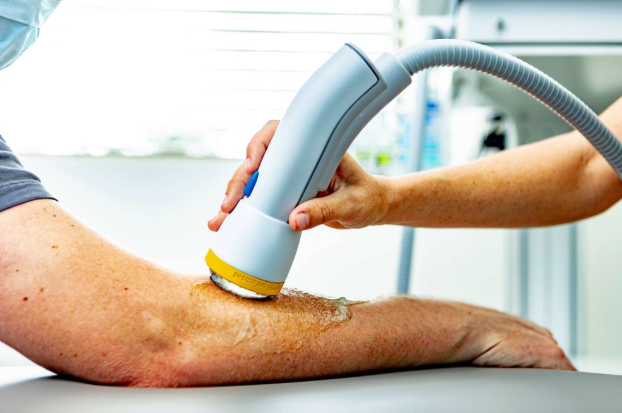
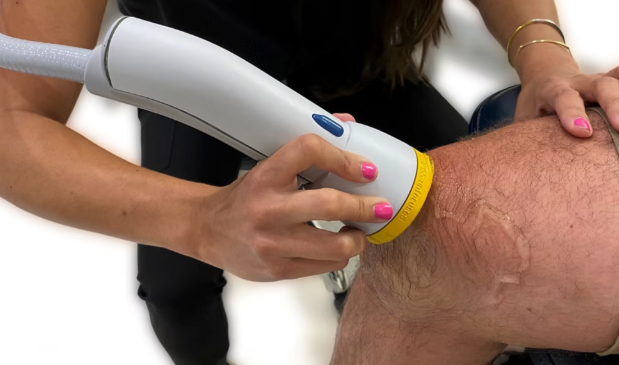
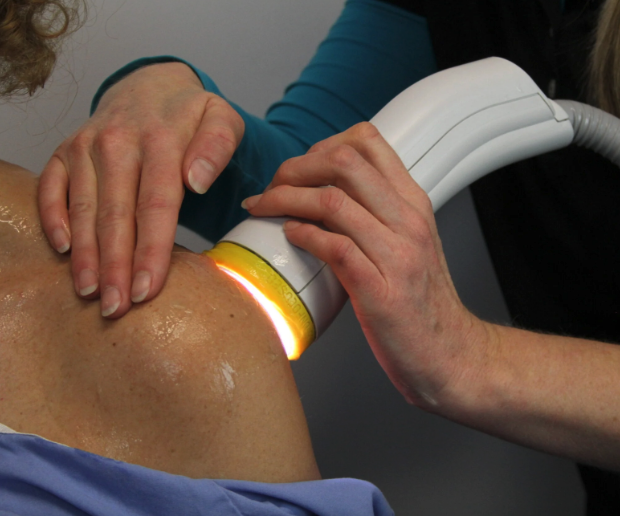
The session itself runs 5 to 15 minutes. Ultrasound gel is applied to the skin. The applicator moves across the treatment area in a systematic pattern. Most patients describe the sensation as a mild pressure or tapping, occasionally more intense over areas of significant tissue damage.
There's no injection. No anesthesia. No recovery time. You can return to normal activity immediately after.
Consider a typical case: someone with a six-month history of plantar fasciitis who's tried orthotics, stretching protocols, and two cortisone injections without lasting relief. After a SoftWave session, they might notice reduced morning stiffness within 15 to 20 hours. Over the following weeks, as the neovascularization and stem cell activity progress, the underlying fascial tissue begins to remodel. The pain doesn't just quiet down. The tissue actually changes.
Peak results typically emerge 8 to 12 weeks after treatment because that's how long tissue remodeling takes. You're not waiting for a drug to wear off. You're waiting for your body to finish building.
If you're ready to find out whether you're a good candidate, SoftWave Therapy East Cobb's Discovery Day is the right first step. For $69, you get a biofeedback assessment and an introductory session, so you can experience the mechanism firsthand before committing to a full protocol.
What Does the Research Say About Effectiveness?
Practitioners using electrohydraulic acoustic shock wave technology report effectiveness rates ranging from 65 to 91 percent for musculoskeletal conditions, depending on the condition being treated and the chronicity of the injury. Acute injuries generally respond faster. Chronic conditions with significant tissue degeneration take longer but still respond well in the majority of cases.
Research published in peer-reviewed journals on extracorporeal shock wave therapy consistently documents the upregulation of VEGF, TGF-beta, and other growth factors following treatment. The stem cell recruitment mechanism has been studied specifically in the context of electrohydraulic devices, and the evidence base for SoftWave's specific technology includes documentation across tendinopathies, osteoarthritis, plantar fasciitis, neuropathy, and back pain.
Waiting for pain to resolve on its own is the most expensive decision most patients make, not in money, but in tissue quality. Chronic inflammation creates fibrosis. Fibrosis reduces range of motion. Reduced range of motion changes movement patterns. Changed movement patterns create secondary injuries. The window for easier, faster healing narrows the longer you wait.
Who Is SoftWave Therapy NOT the Right Fit For?
SoftWave Therapy East Cobb's biofeedback scanning process exists partly to answer this question before treatment begins.
SoftWave is not appropriate for individuals with active malignancy in the treatment area, blood clotting disorders, or implanted devices such as pacemakers near the target tissue. Pregnant patients are not candidates. Open wounds or active infections at the treatment site are contraindications.
For patients with purely structural issues requiring surgical correction, such as a complete tendon rupture or significant spinal instability, SoftWave addresses the tissue environment but doesn't replace surgical reconstruction. The biofeedback assessment will surface these situations. If SoftWave isn't the right fit for your specific presentation, the assessment will tell you that.
The 65 to 91 percent effectiveness range reflects real variation. Not every condition responds equally. Conditions with significant calcification, advanced osteoarthritis with severe joint space loss, or nerve damage that's progressed to structural loss respond more slowly and sometimes incompletely. Honest timelines and realistic expectations are part of what SoftWave Therapy East Cobb provides from the first visit.
The Reframe Most Patients Need
Here's the contrarian claim worth sitting with: most chronic pain isn't a pain problem. It's a tissue repair problem that your pain system is reporting on.
Treating pain as the primary target is like silencing a smoke alarm instead of finding the fire. The alarm stops. The fire doesn't. SoftWave Therapy targets the fire.
The body's capacity to heal damaged musculoskeletal tissue doesn't disappear with age or chronicity. It gets suppressed by poor circulation, insufficient cellular signaling, and a lack of mechanical stimulus. SoftWave restores all three simultaneously, which is why it produces results in tissue that's been symptomatic for years.
That's not a better version of what traditional pain management does. It's a categorically different intervention.
Ready to stop managing symptoms and start addressing the tissue? SoftWave Therapy East Cobb's Discovery Day gives you a real assessment and a real session for $69. HSA and FSA accepted. No injections, no medications, no surgery required.
Frequently Asked Questions
How soon will I feel a difference after my first SoftWave session?
Many patients notice a reduction in pain and swelling within 15 to 20 hours after their first session. The initial response reflects the acute anti-inflammatory effect of the treatment. The deeper tissue remodeling, including neovascularization and stem cell activity, continues over the following weeks, with peak results typically appearing 8 to 12 weeks after treatment.
How many sessions will I need before I see real results?
The number of sessions varies based on the condition, how long it's been present, and how your tissue responds. Practitioners commonly recommend a series of sessions rather than a single treatment, since each session builds on the cellular repair activity initiated by the previous one. The biofeedback assessment at SoftWave Therapy East Cobb helps establish a realistic protocol for your specific situation.
Is SoftWave Therapy painful?
Most patients describe the sensation as mild pressure or tapping. Areas with significant tissue damage may feel more intense during treatment, which is actually useful diagnostic information because it helps identify the exact zones needing the most attention. The discomfort is generally well tolerated and doesn't require anesthesia or numbing agents.
Can SoftWave help if I've already had surgery or injections that didn't work?
Yes, and this is one of the most common presentations at SoftWave Therapy East Cobb. Prior injections or surgery don't disqualify you from SoftWave treatment. In many cases, patients who've exhausted conventional options are strong candidates because their tissue needs regenerative stimulus rather than more symptom suppression.
Does insurance cover SoftWave Therapy?
SoftWave Therapy is not covered by standard health insurance plans. HSA and FSA accounts are accepted, which allows you to use pre-tax dollars toward treatment. The Discovery Day session is available at $69, which gives you a low-cost entry point to assess fit before committing to a full protocol.
What conditions does SoftWave Therapy treat?
SoftWave is used for a wide range of musculoskeletal conditions including plantar fasciitis, tendinopathies, rotator cuff injuries, knee pain, wrist/hand pain, back pain, hip pain, neuropathy, and osteoarthritis-related joint pain. The biofeedback scanning process at SoftWave Therapy East Cobb determines whether your specific condition is a good match for the technology before treatment begins.
Is SoftWave Therapy FDA approved?
Yes. SoftWave's electrohydraulic shock wave technology has received FDA clearance. The device incorporates 46 patented technologies, and its clinical evidence base covers multiple musculoskeletal conditions. FDA clearance means the device has been evaluated for safety and effectiveness, which distinguishes it from wellness devices that operate without regulatory review.
About the Author
SoftWave Therapy East Cobb is a regenerative medicine clinic in the Marietta, GA area specializing in non-invasive shock wave therapy for musculoskeletal pain and injury. They work with athletes, active adults, and chronic pain patients aged 25 to 65 who are seeking alternatives to injections, medications, and surgery. Their approach combines FDA-cleared electrohydraulic technology with biofeedback-guided treatment to address pain at the tissue level rather than the symptom level.
‹ Back

 1000 Johnson Ferry Road