


Blog
Staying Active After 60: Non-Surgical Pain Relief in East Cobb
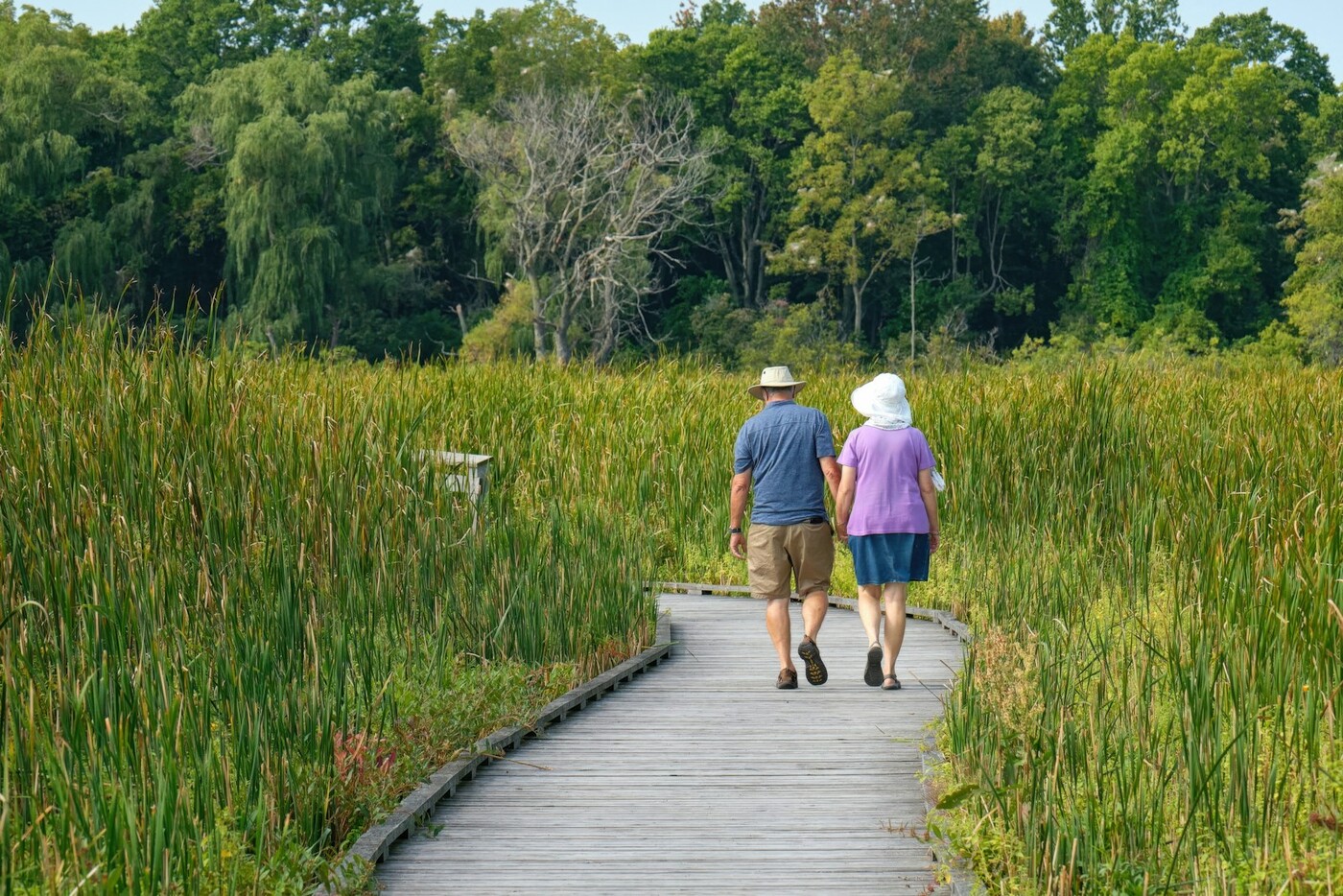
Told to Slow Down? What Active Adults Over 60 Should Know Before Accepting That Advice
There is a particular sentence that gets handed to people after a certain birthday, usually delivered kindly and usually delivered fast: you are going to have to slow down. Sometimes it arrives as that is just arthritis, or you will have to learn to live with it. In East Cobb, plenty of people hear it and quietly rearrange their lives around it. The Thursday golf group gets skipped. The pickleball paddle goes in the closet. The raised beds get planted with something requiring less bending.
Here is the problem with that advice. It treats pain as a fixed feature of getting older rather than as a condition worth evaluating on its own terms. Wear and tear is real. But there is a wide gap between honest limitation and premature surrender, and a lot of capable, independent people end up on the wrong side of it without ever being offered a real alternative.
At SoftWave East Cobb, Dr. Paul Drilling, DC, works with patients across Marietta and Cobb County who want to stay in motion and who have been told their only options are medication, injections, surgery, or acceptance. SoftWave Tissue Regeneration Technology (TRT) offers a different path: non-invasive, drug-free, and designed to work with the body's own repair processes.
Why Healing Actually Does Slow Down With Age
It is worth being straight about this, because pretending otherwise helps nobody. Tissue does repair more slowly at 70 than at 30, for understandable reasons.
Circulation Changes
Blood delivers the oxygen, nutrients, and repair cells tissue needs to rebuild. Over decades, small vessel networks around tendons, ligaments, and joints tend to become less dense and less responsive. Tendons and ligaments have modest blood supply to begin with, which is why they are notoriously slow healers at any age. Reduce that supply further and a strain that once resolved in three weeks can linger for three months.
Slower Cellular Turnover
Repair depends on cells dividing, migrating to the damaged area, and laying down new collagen, and those processes run at a lower tempo later in life. Senescent cells, worn-out cells that no longer function properly but have not cleared out, also accumulate in chronically damaged tissue and interfere with the cells still working.
Accumulated Wear
A joint that carried you through a career, several household renovations, and a few thousand rounds of golf holds the record of all of it. Old compensations stack up. A hip that started guarding itself after an old ankle injury has spent decades distributing load unevenly, and the tissue absorbing the difference eventually complains.
None of that means repair has stopped. It means the signal that starts repair has gotten quieter, and quiet is not the same as gone.
What the "Just Live With It" Message Actually Costs
Accepting persistent pain sounds stoic. In practice it is expensive in ways that are easy to miss until they compound.
- Mobility narrows first. You stop doing the one activity that hurts. Then you stop doing the two adjacent activities that might hurt. The circle keeps tightening.
- Strength and balance follow. Muscle responds to demand. Less walking, lifting, and time on uneven ground translates directly into less capacity, and balance is among the first things to erode when movement drops off.
- Independence is downstream of both. Carrying groceries, climbing stairs, getting off the floor after playing with a grandchild, driving comfortably: these are all strength and mobility tasks in ordinary clothes.
- Social life quietly shrinks. The golf group, the walking club, the garden club. Much of adult social connection is organized around doing something, and withdrawing from the doing tends to mean withdrawing from the people.
That is why the conversation about a sore knee is rarely just about a knee. It is about whether the next decade is lived at full size.
Why a Non-Invasive Option Matters More at This Stage
For adults over 60, the practical objections to conventional pain management are often stronger than a younger person's would be.
Medication interactions. Many active older adults already manage blood pressure, cholesterol, blood sugar, or blood thinners. Adding long-term anti-inflammatories or pain medication to that regimen raises real considerations for the prescribing physician. SoftWave TRT involves no drugs at all, so there is nothing to add to the list and nothing to reconcile with it.
Surgical recovery is not a small ask. Even a successful procedure means anesthesia, restricted activity, a rehabilitation window, and a stretch of reduced independence. For someone living alone, caring for a spouse, or simply unwilling to lose a season, that calculus looks very different than it does at 40. SoftWave is non-invasive, with no needles, no incisions, and no downtime.
Time is not abstract. Sessions typically run about ten to fifteen minutes, and patients generally resume their day immediately. People come in before a tee time and go play.
How SoftWave Is Designed to Work
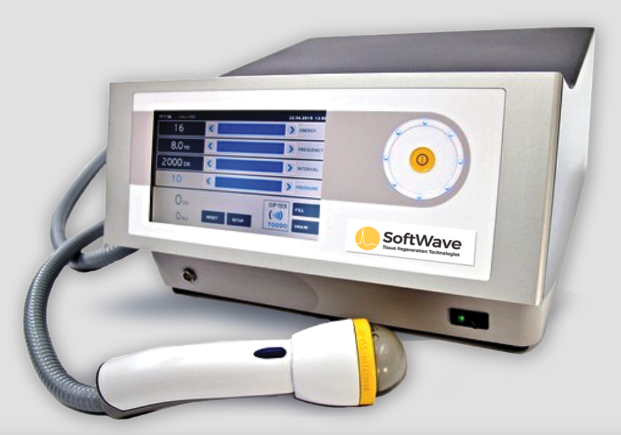
SoftWave TRT delivers electrohydraulic, spark-generated broad-focused acoustic waves through a patented parabolic reflector, and it is the only broad-focused shockwave technology available. Radial devices disperse energy superficially and unevenly, electromagnetic devices lose energy quickly and lack depth, and piezoelectric devices concentrate energy at a single point, which limits the treatment area. The broad-focused design allows meaningful energy to reach a wider volume of tissue at depth, which matters when the structures involved sit well below the surface.
The researched mechanisms behind that energy include:
- Resident stem cell activation and migration, recruiting the body's own repair cells toward the treated tissue.
- Angiogenesis, the formation of new blood vessels, supported by signaling molecules such as VEGF and eNOS. This one is especially relevant when circulation has declined.
- Cell proliferation and collagen support through markers including PCNA and BMP.
- Modulation of inflammation and regulation of toll-like receptors involved in the healing cascade.
- Clearance of senescent cells, the worn-out cells that clutter long-standing problem areas.
These are studied mechanisms, not guaranteed outcomes, and results vary. What they explain is the underlying idea: rather than masking a pain signal, the goal is to prompt the body to restart a repair process that has gone quiet. Age influences how readily that happens, but many patients well into their seventies and eighties report meaningful change.
If you have managed something for months or years and nobody has offered anything beyond pills and patience, an evaluation is a reasonable next move. Schedule your SoftWave Therapy Discovery Day at our East Cobb office and find out whether you are a candidate.
What to Expect If You Come In
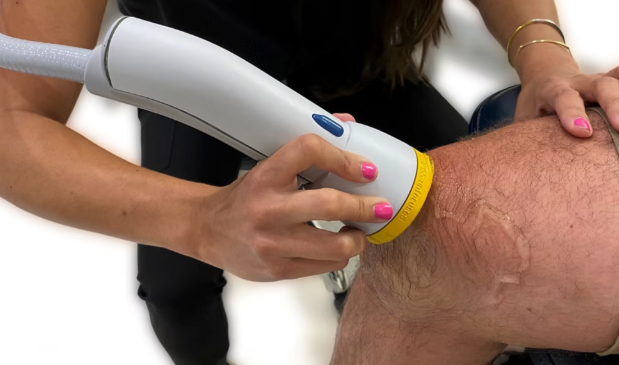
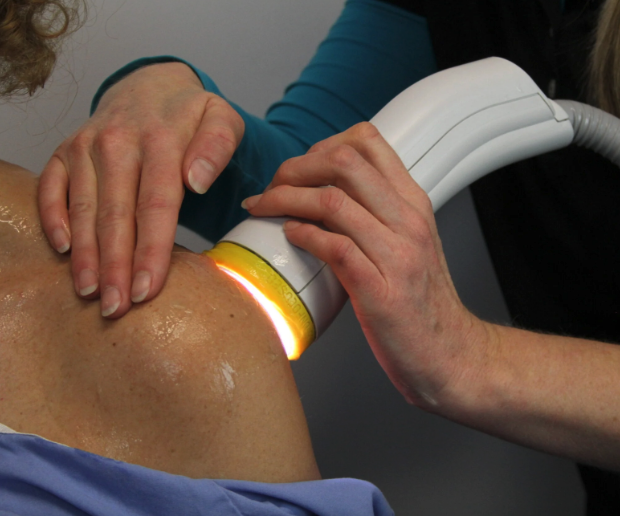
A typical plan runs a series of short sessions over roughly six to eight weeks. You stay clothed except for the treatment area. Gel is applied so the acoustic waves transfer efficiently, and the applicator moves over the region in rapid pulses. Most people describe it as a firm tapping. Sensitive spots feel more pronounced, which is useful, since the device often locates the problem before the patient can point to it precisely.
Progress is rarely a straight line. Some notice change early, others in the middle of the series. Because the therapy is designed to stimulate the body's own processes rather than deliver something that wears off, many patients report continued improvement for weeks and even months after their final visit.
Ready to Take the Next Step?
You have earned the right to keep doing what you enjoy, and "live with it" is a conclusion, not a diagnosis. Come find out what is actually going on and what options you genuinely have.
Request your SoftWave Therapy Discovery Day online today
Contact SoftWave East Cobb
SoftWave East Cobb
1000 Johnson Ferry Road, Suite D-100
Marietta, GA 30068
Phone: (404) 775-3988
Office Hours: Monday and Tuesday 9:00am to 2:00pm, Thursday 12:00pm to 6:30pm
‹ Back

 1000 Johnson Ferry Road