
Blog
SoftWave vs PRP and Stem Cell Injections: Comparing Regenerative Options
Weighing Regenerative Choices in East Cobb: SoftWave, PRP, and Stem Cell Injections
If you have been living with a stubborn knee, a shoulder that will not settle down, or plantar pain that flares every morning, you have probably already run into the word "regenerative." What is rarely explained clearly is that regenerative therapies are not all the same thing. Some involve drawing your blood or harvesting tissue and injecting it back into a joint. Others involve no needles at all. Understanding that difference is the first step in choosing sensibly.
At SoftWave East Cobb, Dr. Paul Drilling, DC, works with patients across Marietta and Cobb County who are trying to sort through exactly this question. Many arrive after researching platelet-rich plasma (PRP) or so-called stem cell injections and pausing at the price tag, the needles, or both. SoftWave Tissue Regeneration Technology (TRT) offers a different pathway: a non-invasive, in-office approach that is designed to stimulate the body's own repair signaling without introducing anything into the tissue. This article compares the approaches honestly, including where injection therapies may still be the better fit.
What PRP Injections Actually Are
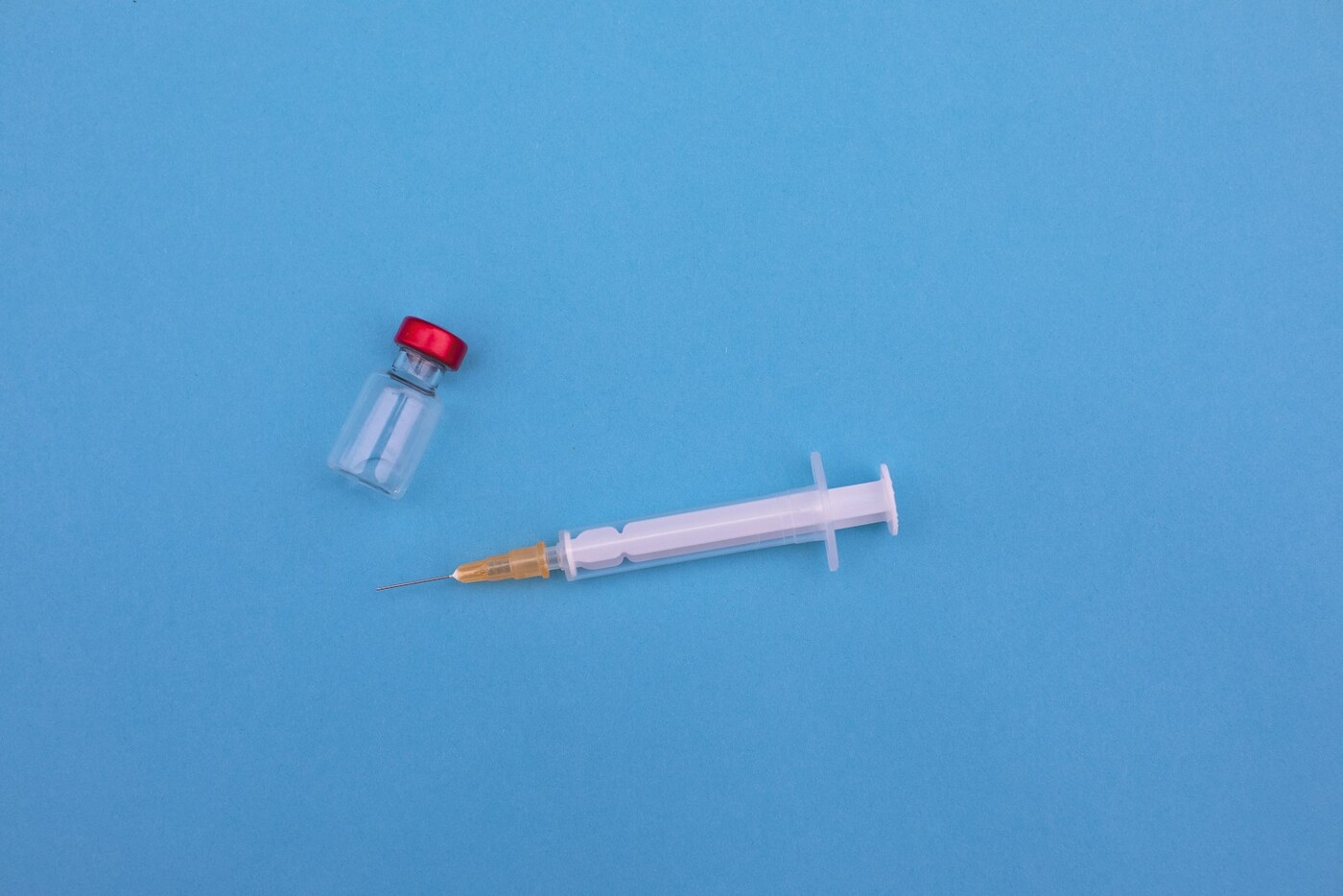
Platelet-rich plasma therapy starts with your own blood. A clinician draws a sample, spins it in a centrifuge to concentrate the platelets and growth factors they carry, then injects that concentrate into or around the target tissue, often under ultrasound guidance.
The reasoning is straightforward. Platelets are among the first responders in any injury, and they release signaling proteins that recruit repair activity. Delivering them directly to a tendon, ligament, or joint is intended to give a chronically under-healing area a stronger repair signal than it can generate on its own.
Practical realities worth knowing:
- It is an injection procedure, so there is a needle, and there is usually some post-injection soreness for a few days.
- Preparation methods and concentrations vary widely between providers, which makes results harder to compare across clinics.
- It is generally not covered by insurance and is paid out of pocket, often at significant cost per injection.
- Multiple injections are frequently recommended rather than a single treatment.
What "Stem Cell" Injections Involve
The term covers several quite different products. Some clinics harvest a patient's own tissue, usually bone marrow aspirate from the pelvis or fat through a small liposuction procedure, process it, and inject the resulting concentrate. Others use birth tissue products derived from donated amniotic fluid, umbilical cord, or placental tissue.
These are more involved than PRP. Harvesting bone marrow or adipose tissue is a minor procedure in its own right, with its own discomfort and recovery. Costs tend to be higher still. And the regulatory picture around cell-based products is complicated, with meaningful differences between what is permitted, what is investigational, and what is marketed loosely. Anyone considering this route should ask direct questions about exactly what product is being used, where it comes from, and what its regulatory status is.
None of this makes injection therapies a bad choice. For certain structural problems, a targeted injection placed precisely under imaging may be exactly what is called for. The point is simply that these are procedures, with the costs, needles, and recovery that procedures carry.
Where SoftWave Is Fundamentally Different
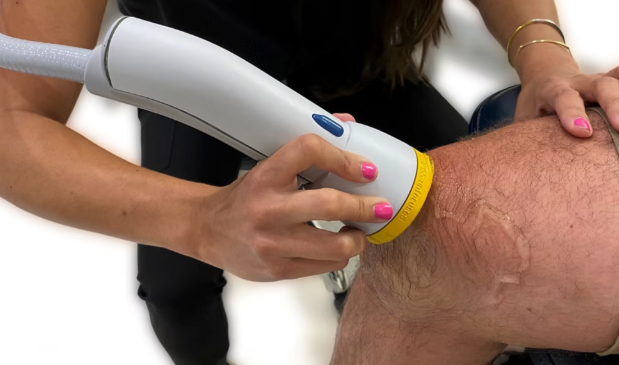
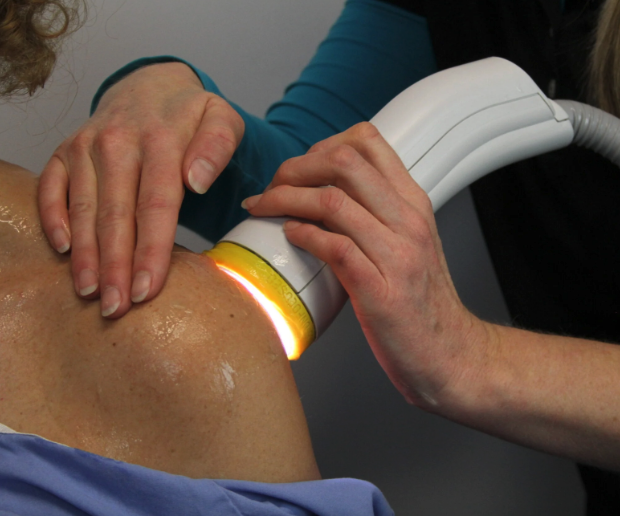
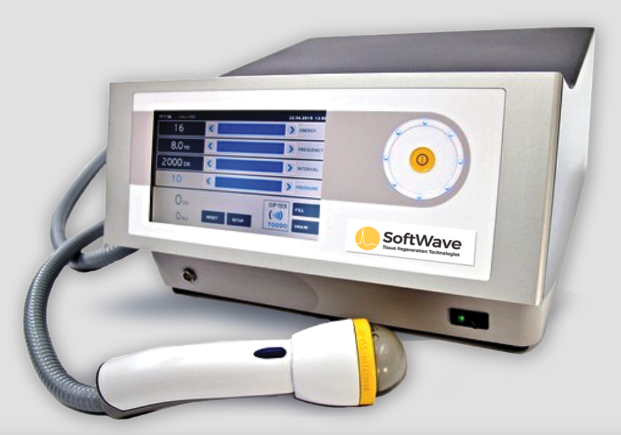
SoftWave TRT does not inject anything. It uses electrohydraulic, spark-generated acoustic waves delivered through a patented parabolic reflector, producing broad-focused shockwaves that travel through the skin into the tissue below. It is the only broad-focused shockwave technology, distinct from radial devices that disperse energy superficially and unevenly, electromagnetic systems that lose energy quickly and lack depth, and piezoelectric devices that concentrate energy at a single point and therefore treat a very limited area.
The conceptual difference matters more than the hardware. Injection therapies bring biological material to the site. SoftWave is designed to activate what is already there. The mechanical energy of the acoustic wave acts as a signal to the tissue itself, with research pointing to activation and migration of the body's own resident stem cells already living in the treated area. Nothing is harvested, concentrated, or introduced.
How SoftWave Is Thought to Work
Researchers studying broad-focused acoustic waves have described several mechanisms. These are mechanisms observed in research, not promised outcomes for any individual:
- Resident stem cell activation and migration: the body's own repair cells, already present in the tissue, are stimulated and recruited toward the treated area.
- Angiogenesis: formation of new small blood vessels, associated with signaling factors including VEGF and eNOS, supporting circulation to areas that have become poorly supplied.
- Cell proliferation and collagen activity: markers such as PCNA and BMP are associated with new cell production and connective tissue building.
- Inflammation modulation: a shift away from a stalled, low-grade chronic inflammatory state.
- Toll-like receptor regulation and clearance of senescent cells: helping to clear worn-out, non-functional cells so healthier tissue can take their place.
Comparing the Experience
The day-to-day difference is easy to describe. A SoftWave session takes roughly ten to fifteen minutes. There are no needles, no drugs, no surgery, and no downtime. Patients typically walk in, receive treatment, and return to normal activity immediately, including driving themselves home. Care is usually delivered as a series over about six to eight weeks, and because the therapy works by stimulating the body's own processes, the healing response continues for weeks and sometimes months after the final session.
Injection therapies compress the intervention into fewer visits but involve a procedure each time, often with restricted activity afterward. Neither model is automatically better. Some patients prefer avoiding needles and want to keep working and exercising throughout. Others would rather have fewer appointments and accept a procedure.
If you are sorting through these options and want a straightforward conversation about which makes sense for your situation, schedule a consultation with SoftWave East Cobb and get your questions answered before you commit to anything.
They Are Not Always Either/Or
It is worth knowing that SoftWave is sometimes used alongside injection therapies rather than instead of them. Some clinicians use acoustic wave treatment to improve local circulation and tissue signaling around a joint before or after an injection, on the reasoning that a better-perfused, more metabolically active environment gives injected material a more favorable place to work. If you are already committed to PRP or a cell-based injection, that does not close the door on SoftWave, and it is a reasonable question to raise with both providers.
Honest Framing on Results
No responsible provider can promise you an outcome from any of these therapies. Response varies with the tissue involved, how long the problem has been present, your overall health, and factors nobody fully controls. Many patients report meaningful improvement with SoftWave, and many report the same with PRP. Neither is a cure, neither replaces medical advice or a proper diagnosis, and neither suits every condition. What SoftWave offers is a low-barrier starting point: nothing invasive, nothing introduced into your body, no recovery to plan around.
Questions Worth Asking Any Provider
- What exactly is being applied, and what supports it for my specific problem?
- How many sessions are realistically expected, and what is the total cost?
- What happens if I do not respond, and when would we change course?
- Is there a less invasive option worth trying first?
Ready to Take the Next Step?
Comparing regenerative options is easier with real information than with advertising, and a short conversation can tell you a great deal about whether SoftWave fits your knee, shoulder, hip, or foot problem. Dr. Paul Drilling, DC, will walk you through what the therapy can and cannot do so you can decide with clear eyes.
Request your SoftWave Therapy Discovery Day online today
Contact SoftWave East Cobb
SoftWave East Cobb
1000 Johnson Ferry Road, Suite D-100
Marietta, GA 30068
Phone: (404) 775-3988
Office Hours: Monday and Tuesday 9:00am to 2:00pm, Thursday 12:00pm to 6:30pm
‹ Back

 1000 Johnson Ferry Road