


Blog
Lower Back Pain That Will Not Quit: Non-Surgical Options in East Cobb

Lower Back Pain That Will Not Quit: Non-Surgical Options in East Cobb
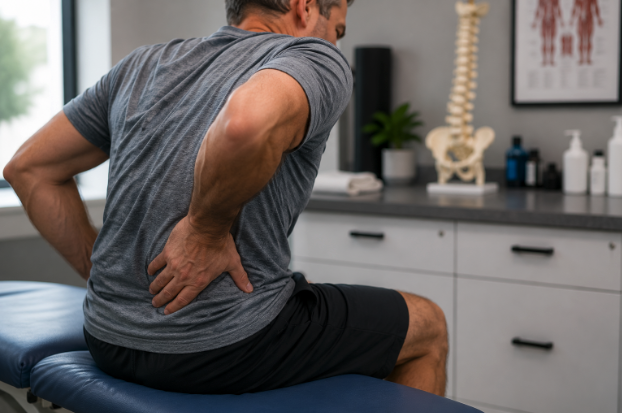
There is a particular kind of frustration that belongs only to chronic lower back pain. It is not the dramatic pain of a sudden injury. It is the low, grinding version that has been part of your life for months or years: the reason you brace yourself getting out of the car, the reason you stopped volunteering for yard work, the reason a drive down I-75 now requires planning. You have probably been told it is just age, or just stress, or that your imaging looked fine and you should stay active. None of that made it stop.
At SoftWave East Cobb, Dr. Paul Drilling, DC, works with people across Marietta and Cobb County who have been living with persistent back pain and want something between endless medication and a surgical consultation. SoftWave Tissue Regeneration Technology (TRT) is a non-invasive option aimed at the soft-tissue component of that pain. This article covers what drives chronic lower back pain, when it warrants urgent evaluation, and where SoftWave fits.
Why Chronic Back Pain Rarely Has One Clean Cause
Acute back pain usually has a story. You lifted something wrong, you slipped on wet pine straw, you spent a weekend hauling mulch. Chronic back pain often has no story at all, or the story ended long ago and the pain simply stayed.
This is where a lot of patients get stuck. They get an X-ray or an MRI expecting a clear answer and instead receive a report full of findings that may or may not be relevant: mild degenerative changes, some facet arthropathy, a bulge here or there. Imaging and pain do not correlate as neatly as most people assume. Plenty of people with unremarkable scans hurt every day, and plenty with impressive-looking reports feel nothing.
What that usually means is that the pain is not coming from one broken part. It comes from a system that has gradually stopped sharing load well, with several soft-tissue contributors involved at once.
Muscular and Fascial Strain
The lumbar spine is surrounded by layers of muscle and connective tissue meant to work as a coordinated unit. When one area becomes guarded or restricted, neighboring tissue picks up the slack, and over months that compensation becomes the new normal. The tissue thickens, loses elasticity, and develops persistently irritable areas. This is the deep, diffuse ache people struggle to point to with one finger.
Facet Joint Irritation
The small paired joints at the back of each spinal segment guide and limit motion. They are richly innervated, so they are fully capable of generating real pain when chronically irritated. Facet-related pain often feels worse with extension, with long stretches of standing, and first thing in the morning, and tends to ease when you sit and lean forward.
A Core That Has Quietly Deconditioned
The deep stabilizing muscles of the trunk and hips are meant to protect the lumbar spine during ordinary movement, and pain inhibits them. When they switch off, larger surface muscles take over jobs they were never designed for, then fatigue and complain. The result is a self-sustaining loop: pain causes deconditioning, deconditioning causes more pain.
Sacroiliac Involvement
The sacroiliac joints, where the base of the spine meets the pelvis, are frequent quiet participants in chronic low back pain. SI-related pain typically sits lower and off to one side, sometimes just below the belt line, and often flares with prolonged standing, stair climbing, or rolling over in bed. Because it can refer into the buttock and upper thigh, it is regularly mistaken for something else.
Discs and nerve root irritation are real and worth evaluating, but they are far from the whole picture, and treating every chronic back as a disc problem leaves a great deal on the table.
Red Flags: When Back Pain Needs Urgent Evaluation
Most chronic lower back pain is mechanical and not dangerous, but it is worth knowing the exceptions. Seek prompt medical evaluation rather than waiting if you experience any of the following:
- Loss of bowel or bladder control, or new numbness in the groin or inner thigh region.
- Progressive numbness or weakness in one or both legs, especially weakness that is getting worse rather than staying steady.
- Unexplained weight loss accompanying back pain.
- Fever along with back pain, or a history of recent infection.
- Significant trauma, or new back pain in someone with a history of cancer or osteoporosis.
These are genuine red flags, not reasons for general alarm. If none apply and your pain has been a steady companion for months, you are likely dealing with a mechanical, soft-tissue problem, exactly the category where conservative care has room to work.
How SoftWave Is Designed to Help
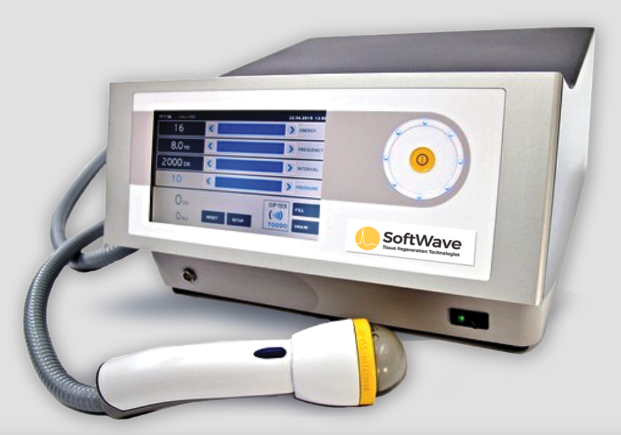
SoftWave TRT uses electrohydraulic, spark-generated broad-focused acoustic waves delivered through a patented parabolic reflector, the only broad-focused shockwave technology of its kind. Radial devices disperse energy superficially and unevenly, electromagnetic devices lose energy quickly and lack depth, and piezoelectric devices concentrate energy at a single point, which limits the treatment area. For the lumbar region, where the tissue in question sits under substantial muscle bulk and spans a wide area, that difference in delivery matters.
Researched mechanisms behind the technology include:
- Resident stem cell activation and migration, recruiting the body's own repair cells toward the treated region.
- Angiogenesis, the formation of new blood vessels, supported by signaling molecules such as VEGF and eNOS.
- Cell proliferation and collagen support involving markers such as PCNA and BMP.
- Modulation of inflammation and regulation of toll-like receptors within the healing cascade.
- Clearance of senescent cells, the worn-out cells that accumulate in chronically stressed tissue.
These are studied mechanisms, not guaranteed outcomes, and SoftWave is not a replacement for medical evaluation. What it offers is a way to address the tissue environment itself rather than only quieting the signal coming from it.
If your back has been running your calendar for longer than you care to admit, the practical next step is an evaluation rather than another month of waiting. Schedule your SoftWave Therapy Discovery Day at our East Cobb office and find out whether your case is a reasonable fit.
What Treatment Actually Looks Like
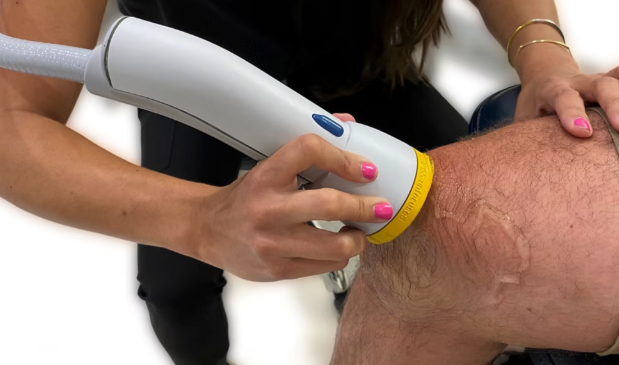
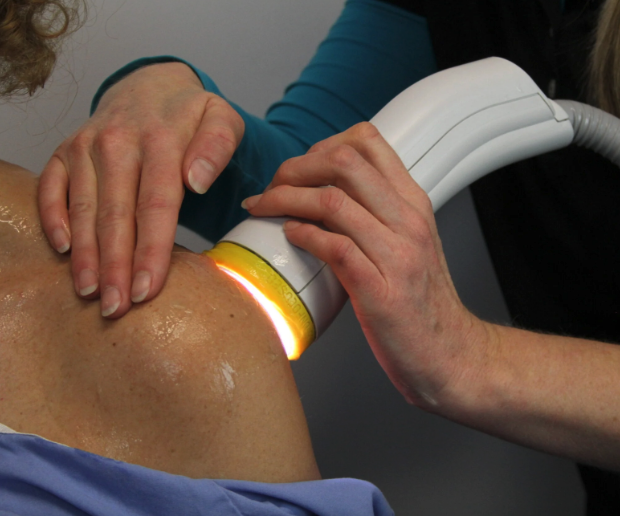
There are no needles, no drugs, no incisions, and no downtime. You remain clothed apart from exposing the lower back. Gel is applied so the acoustic waves transfer efficiently, and the applicator is moved across the region while delivering rapid pulses. Most people describe it as a firm tapping sensation, more pronounced over irritated areas.
Sessions generally run about ten to fifteen minutes, and a typical plan spans roughly six to eight weeks. Because the goal is stimulating your own repair processes rather than delivering something that wears off, many patients report continued improvement for weeks and even months after the final session. Progress is often uneven early on, which is why completing the recommended series before drawing conclusions matters.
Where It Fits Alongside Everything Else
SoftWave is not a substitute for rebuilding the core support your spine lost along the way. It works best within a broader approach: calm the irritated tissue, restore tolerable movement, then rebuild capacity so the same pattern does not reassemble itself. Dr. Drilling evaluates the whole picture, including how your hips, pelvis, and movement habits contribute, rather than treating one sore spot in isolation.
Ready to Take the Next Step?
Chronic lower back pain that has resisted everything else is not proof that nothing will help. Get evaluated, find out what is actually driving it, and see whether a non-surgical option belongs in your plan.
Request your SoftWave Therapy Discovery Day online today
Contact SoftWave East Cobb
SoftWave East Cobb
1000 Johnson Ferry Road, Suite D-100
Marietta, GA 30068
Phone: (404) 775-3988
Office Hours: Monday and Tuesday 9:00am to 2:00pm, Thursday 12:00pm to 6:30pm
‹ Back


 1000 Johnson Ferry Road