


Blog
Focused, Radial, or Unfocused? Shockwave Therapy Types Explained

Not All Shockwave Devices Are the Same: What East Cobb Patients Should Know Before Booking
Search for shockwave therapy around Marietta and Cobb County and you will find a long list of offices advertising it. Chiropractic clinics, physical therapy practices, med spas, and wellness centers all use the same word. That word, unfortunately, tells you almost nothing about the machine in the treatment room. "Shockwave" is a category, not a technology, and the devices inside it work in genuinely different ways, reach different depths, and cover very different amounts of tissue per pulse.
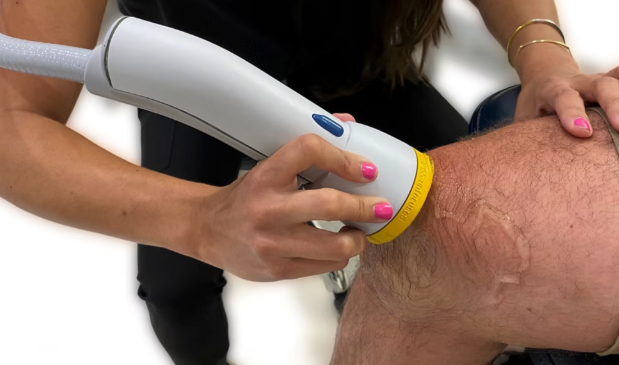
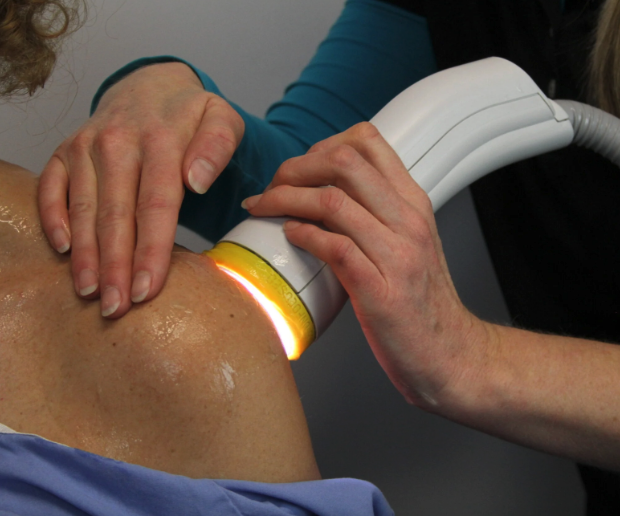
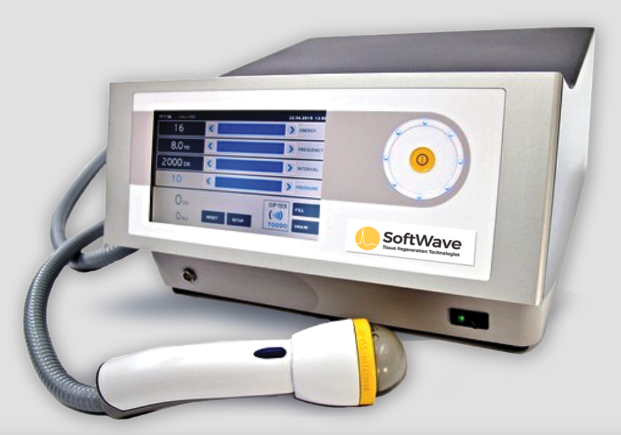
At SoftWave East Cobb, Dr. Paul Drilling, DC, works with SoftWave TRT, an electrohydraulic device that produces broad-focused acoustic waves. That phrase is doing real work, and this article is meant to unpack it. The goal is not to talk you into anything. The goal is to give you enough vocabulary that when you call any clinic in East Cobb, including ours, you can ask one useful question: what kind of shockwave device is this, and what does it actually do to tissue?
The Four Main Ways a Device Creates an Acoustic Wave
Every shockwave or acoustic-wave device has to generate a pressure wave somehow. There are four common engineering approaches, and each one carries built-in trade-offs in depth, focus, and coverage area.
Radial Pressure Waves
Radial devices are the most common thing marketed as "shockwave," partly because they are the least expensive to add to a practice. A radial handpiece typically uses compressed air to fire a projectile against an applicator head, sending a pressure wave into the tissue at the point of contact.
The important detail is what happens next. Per the manufacturer's comparative description, radial devices disperse energy superficially and unevenly. The wave is strongest right at the skin and spreads outward as it travels, losing intensity as it goes. That makes radial reasonable for surface-level work, but the energy is not distributed consistently through a target that sits deeper than the first layers of tissue.
Electromagnetic Generation
Electromagnetic devices use a coil and a metal membrane. Running current through the coil repels the membrane, which pushes against a fluid medium and creates a pressure wave. It is a clean, repeatable way to make a wave, and these systems are common in focused shockwave equipment.
The limitation the manufacturer highlights in its comparison is that electromagnetic energy loses energy quickly and lacks depth. The wave is generated efficiently, but it does not sustain intensity as it moves through tissue the way the marketing category might imply. Depth of effect matters when the problem is not on the surface.
Piezoelectric Generation
Piezoelectric devices use an array of crystals that expand when voltage is applied. Arranged on a curved surface, hundreds or thousands of these crystals fire together and their individual pressure waves converge at a single geometric point.
This produces excellent precision. The trade-off is coverage. Per the manufacturer's comparison, piezoelectric technology generates highly focused energy at a single point, which limits the treatment area. If the problem is diffuse, or the tissue that needs stimulating is broader than a pinpoint, you spend the session trying to paint a wall with a very fine brush.
Electrohydraulic Broad-Focused Waves
SoftWave TRT uses a fourth approach. A spark is generated underwater inside the applicator. That spark creates a rapid pressure event, and the resulting wave is then shaped by a patented parabolic reflector.
The reflector is the differentiator. Instead of converging energy to one tiny focal point, the parabolic geometry sends the wave outward in a wide, parallel dispersion pattern that carries at depth. SoftWave describes itself as the only broad-focused shockwave technology, distinct from radial, electromagnetic, and piezoelectric approaches. In practical terms, that means a larger volume of tissue receives a consistent dose of acoustic energy per pulse, rather than a hot spot at the skin or a pinpoint deep in the tissue.
Why the Shape of the Wave Matters Biologically
Acoustic energy is not doing anything mechanical in the sense of breaking things up. It is a signal. Researchers have looked at how that mechanical signal is translated into a cellular response, and the mechanisms described in the literature include:
- Resident stem cell activation and migration, encouraging the body's own repair cells to become active and move toward the treated area
- Angiogenesis, the formation of new blood vessels, associated with signaling molecules such as VEGF and eNOS
- Cell proliferation and collagen activity, associated with markers such as PCNA and BMP
- Modulation of inflammation, which is different from simply shutting inflammation off
- Toll-like receptor regulation, part of how tissue coordinates a repair response
- Clearance of senescent cells, the worn-out cells that linger in tissue and interfere with normal turnover
These are researched mechanisms, not promises about how any one person will respond. But they explain why coverage and depth are not marketing trivia. If the biological effect depends on tissue receiving adequate acoustic energy, then how much tissue the device can reach, and how deeply, is directly relevant to what happens in the treatment room.
If you have been comparing clinics and cannot get a straight answer about which technology a practice uses, that is worth noticing. You are welcome to schedule a SoftWave Therapy Discovery Day at our East Cobb office and see the device, ask about the parabolic reflector, and get your questions answered before committing to anything.
What a SoftWave Session Actually Involves
The technology talk is useful, but patients also want to know what the appointment feels like. SoftWave TRT is non-invasive. There are no needles, no drugs, no surgery, and no downtime afterward. Sessions typically run about ten to fifteen minutes, and most people go straight back to their day.
Care is usually delivered as a series over roughly six to eight weeks rather than as a single visit, because the mechanisms above are biological processes that unfold over time. Many patients report that changes continue for weeks and even months after the final session, since the body is still working through the repair cascade that was stimulated.
The Questions Worth Asking Any Clinic
If you take nothing else from this article, take this short list into your next phone call:
- What type of shockwave device is it: radial, electromagnetic, piezoelectric, or electrohydraulic?
- Is the energy focused, broad-focused, or radial in its dispersion pattern?
- How deep does the energy reach, and how large an area does each pulse cover?
- Who is operating the device, and how are treatment areas determined?
- How many sessions are typically recommended, and what does the plan look like?
None of these questions are hostile. Any clinic that is confident in its equipment will answer them happily. SoftWave TRT has been studied at leading institutions and is used by clinicians who work with professional and collegiate athletes, and Dr. Drilling is glad to walk East Cobb patients through exactly how the device works and whether it is a reasonable fit for their situation. It is also worth saying plainly: SoftWave is not a cure, it is not right for everyone, and nothing here replaces a conversation with your own physician about your specific condition.
Ready to Take the Next Step?
If you have been shopping for shockwave therapy around Marietta and want to understand the difference between the devices before you spend money on a package, come see a broad-focused electrohydraulic system in person. Bring your questions, and bring your list.
Request your SoftWave Therapy Discovery Day online today
Contact SoftWave East Cobb
SoftWave East Cobb
1000 Johnson Ferry Road, Suite D-100
Marietta, GA 30068
Phone: (404) 775-3988
Office Hours: Monday and Tuesday 9:00am to 2:00pm, Thursday 12:00pm to 6:30pm
‹ Back



 1000 Johnson Ferry Road