


Blog
Chronic Diabetic Foot Ulcers: An FDA-Cleared Path to Wound Healing
Chronic Diabetic Foot Ulcers: An FDA-Cleared Path to Wound Healing
A wound on the foot that will not close is one of the most serious problems a person living with diabetes can face, and it is one of the most misunderstood. Families across East Cobb tend to treat a foot sore the way they would treat a scrape on a forearm: cover it, keep an eye on it, and expect it to be gone in a week or two. When it is still there a month later, the concern finally sets in. By then the wound has often become more complicated than it needed to be.
At SoftWave East Cobb, Dr. Paul Drilling, DC, works with patients throughout Marietta and Cobb County who are dealing with slow-healing tissue. SoftWave Tissue Regeneration Technology (TRT) carries an FDA clearance for the treatment of chronic diabetic foot ulcers, along with a separate clearance for temporary increase in blood flow. That is unusual, and it is worth understanding. It is also worth saying clearly at the outset: a diabetic foot ulcer is a medical condition that requires coordinated medical care. SoftWave is intended to work alongside that care, never in place of it.
Why Diabetic Foot Wounds Refuse to Close
A healthy body treats an open wound as an emergency. Blood flow increases, immune cells arrive, new vessels form, collagen is laid down, and the tissue rebuilds. Diabetes can interfere with nearly every step in that sequence, which is why a wound that would be trivial on another person can become a months-long problem.
Neuropathy Hides the Injury
Peripheral neuropathy dulls or eliminates sensation in the feet. Pain is the body's alarm system, and when that alarm is disabled, injuries happen silently. A seam inside a shoe, a small pebble, a blister from a longer walk than usual, a callus that has been building pressure for weeks: any of these can break the skin without registering as discomfort. The wound is then walked on, day after day, because nothing signals that anything is wrong. Repeated pressure on an open wound is one of the primary reasons these ulcers persist.
Circulation Falls Short
Diabetes is hard on blood vessels, particularly the small ones and particularly in the feet, which sit at the far end of the circulatory system. Healing is an expensive metabolic process. It requires oxygen, nutrients, and a steady supply of the cells that do the rebuilding, and all of that arrives by blood. When perfusion to the foot is reduced, the tissue may simply lack the raw materials to finish the job. The wound does not so much fail as stall.
The Immune Response Is Impaired
Elevated blood glucose affects how immune cells function. White blood cells may be less effective at clearing bacteria, which raises infection risk in an already open wound. Infection then consumes resources that would otherwise go toward repair. This is the cycle that makes diabetic foot ulcers so stubborn: reduced sensation allows ongoing injury, reduced circulation slows repair, and reduced immune function invites infection.
Why a Non-Healing Wound Is Not Something to Manage at Home
This deserves its own section because the stakes are genuinely high. Chronic diabetic foot ulcers can progress to deep infection, bone involvement, hospitalization, and in serious cases amputation. The progression is not always dramatic or obvious from the outside, and a wound that looks small on the surface can be considerably more involved underneath.
If you have diabetes and a sore, blister, ulcer, or area of broken skin on your foot that has not healed, please do not wait it out and please do not self-treat it. Contact your physician, podiatrist, or wound care specialist promptly. Signs that warrant immediate attention include increasing redness or warmth, swelling, drainage, odor, fever, or any change in the color of the surrounding skin. Prompt evaluation is the single most protective thing you can do.
Nothing in this article, and nothing offered at our office, is a substitute for that evaluation.
Where SoftWave Fits Into a Wound Care Plan
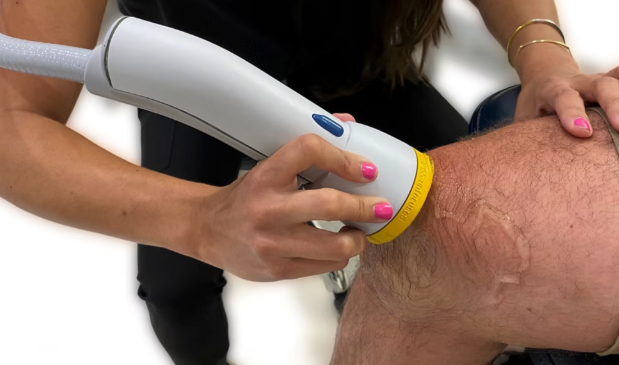
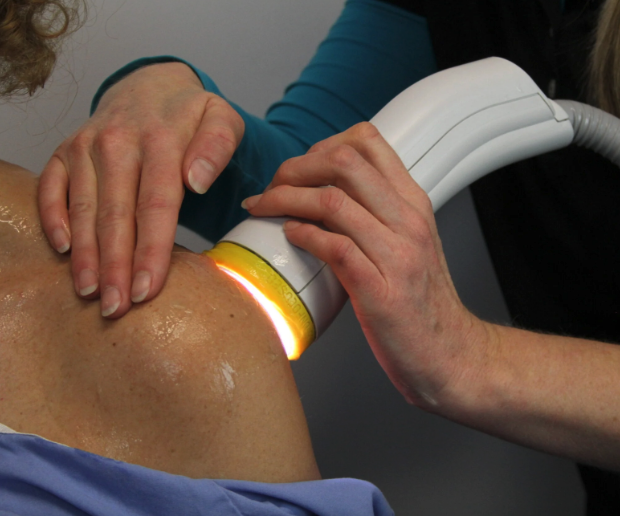
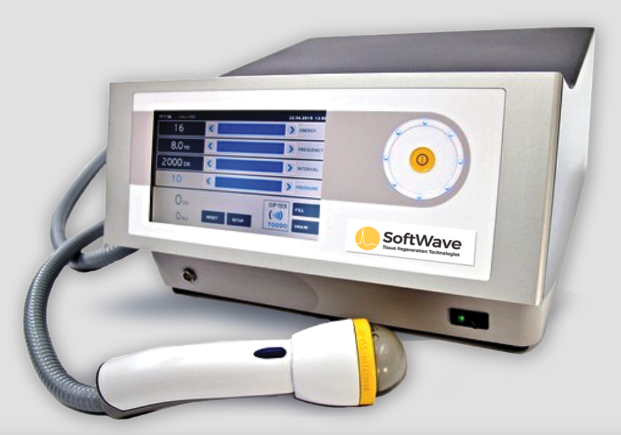
SoftWave TRT uses electrohydraulic, spark-generated broad-focused acoustic waves delivered through a patented parabolic reflector. It is the only broad-focused shockwave technology of its kind. Radial devices disperse energy superficially and unevenly, electromagnetic devices lose energy quickly and lack depth, and piezoelectric devices concentrate energy at a single point, which limits the treatment area. The broad-focused design allows energy to reach a wider volume of tissue, including tissue below the visible wound surface.
Two of SoftWave's FDA clearances are directly relevant here. The first is treatment of chronic diabetic foot ulcers. The second is temporary increase in blood flow, which matters because inadequate perfusion is central to why these wounds stall.
The researched mechanisms behind the technology include:
- Angiogenesis, the formation of new blood vessels, supported by signaling molecules such as VEGF and eNOS.
- Resident stem cell activation and migration, drawing the body's own repair cells toward the treated tissue.
- Cell proliferation and collagen support through markers including PCNA and BMP, which relate to building new tissue.
- Modulation of inflammation and regulation of toll-like receptors involved in the healing cascade.
- Clearance of senescent cells, the worn-out cells that accumulate in chronically damaged tissue.
These are studied mechanisms, not guaranteed outcomes. The goal is to address the biological environment around a wound that has gone quiet. It does not replace offloading, debridement, dressings, infection management, vascular assessment, or blood sugar control, all of which remain the responsibility of your medical team.
If you are working with a physician on a wound that is not progressing and you want to know whether this technology could reasonably be added to your existing plan, schedule a SoftWave Therapy Discovery Day at our East Cobb office and bring the question to a conversation rather than leaving it unasked.
What Treatment Involves
SoftWave sessions are non-invasive. There are no needles, no drugs, no incisions, and no anesthesia. Treatment time is typically around ten to fifteen minutes, and there is no downtime afterward. Care is generally delivered as a series over roughly six to eight weeks, and because the technology is designed to stimulate the body's own processes rather than deliver a substance that wears off, the biological response can continue for weeks after the final session.
Candidacy is determined individually. Some patients are appropriate for this technology and some are not, and that determination is made in coordination with the physicians already managing the wound.
Care That Works Together, Not in Competition
The patients who do best with a chronic wound are the ones with a coordinated team. That usually means a primary care physician or endocrinologist managing blood sugar, a podiatrist or wound care specialist managing the wound itself and the pressure on it, and appropriate vascular evaluation when circulation is in question. Keep every one of those appointments. Keep taking what you have been prescribed. Keep your diabetes management plan on track, because glucose control influences healing more than any single intervention.
SoftWave is offered as a complement to that structure. We are glad to communicate with the providers already involved in your care, and we would rather you arrive here with a wound care team in place than without one.
Ready to Take the Next Step?
If you are living with diabetes in East Cobb and a foot wound is not healing, the first call should be to your physician or wound care specialist. Once that care is underway, we are happy to discuss whether SoftWave belongs alongside it.
Request your SoftWave Therapy Discovery Day online today
Contact SoftWave East Cobb
SoftWave East Cobb
1000 Johnson Ferry Road, Suite D-100
Marietta, GA 30068
Phone: (404) 775-3988
Office Hours: Monday and Tuesday 9:00am to 2:00pm, Thursday 12:00pm to 6:30pm
‹ Back



 1000 Johnson Ferry Road