
Blog
Angiogenesis Explained: How SoftWave Supports Blood Supply to Injured Tissue
Why Some East Cobb Injuries Take Forever to Heal
You sprain an ankle and it is sore for a week. You cut your finger and it closes in a few days. But you strain a tendon in your shoulder, or wear down the cartilage in your knee, and somehow you are still dealing with it eight months later. That difference is not about willpower, and it is usually not about how tough you are. A lot of it comes down to plumbing: how much blood actually reaches the tissue that got hurt.
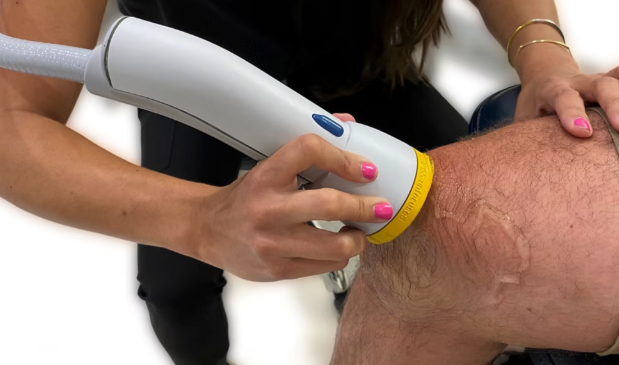
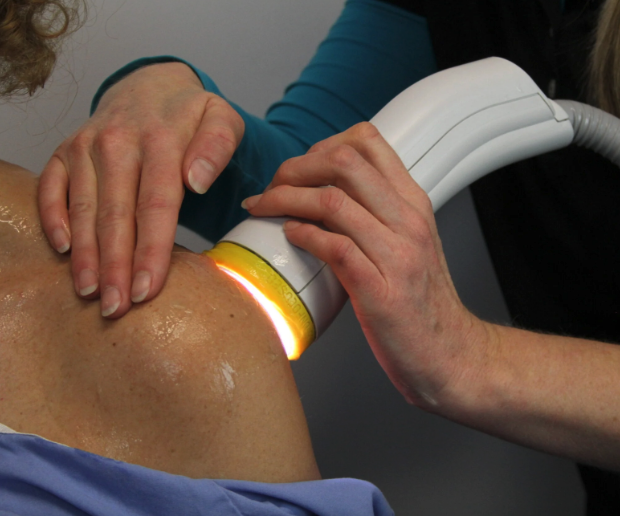
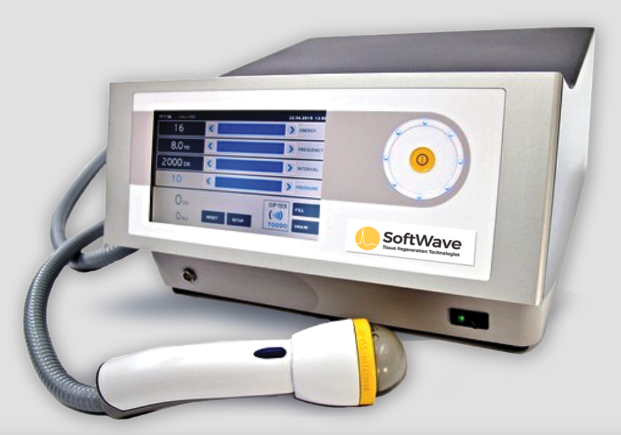
At SoftWave East Cobb, Dr. Paul Drilling, DC, works with people all over Marietta and Cobb County who are stuck in exactly that spot. They have rested it, iced it, stretched it, and waited. The tissue is still irritated. SoftWave Tissue Regeneration Technology (TRT) takes a different approach. Instead of masking the discomfort, it uses acoustic wave energy to stimulate the injured area, and one of its FDA-cleared uses is a temporary increase in blood flow to the treated tissue.
This article walks through the science in plain language: why blood supply matters so much, what angiogenesis means, and what research suggests happens inside tissue when shockwave energy passes through it.
Blood Supply Is the Hidden Variable in Healing
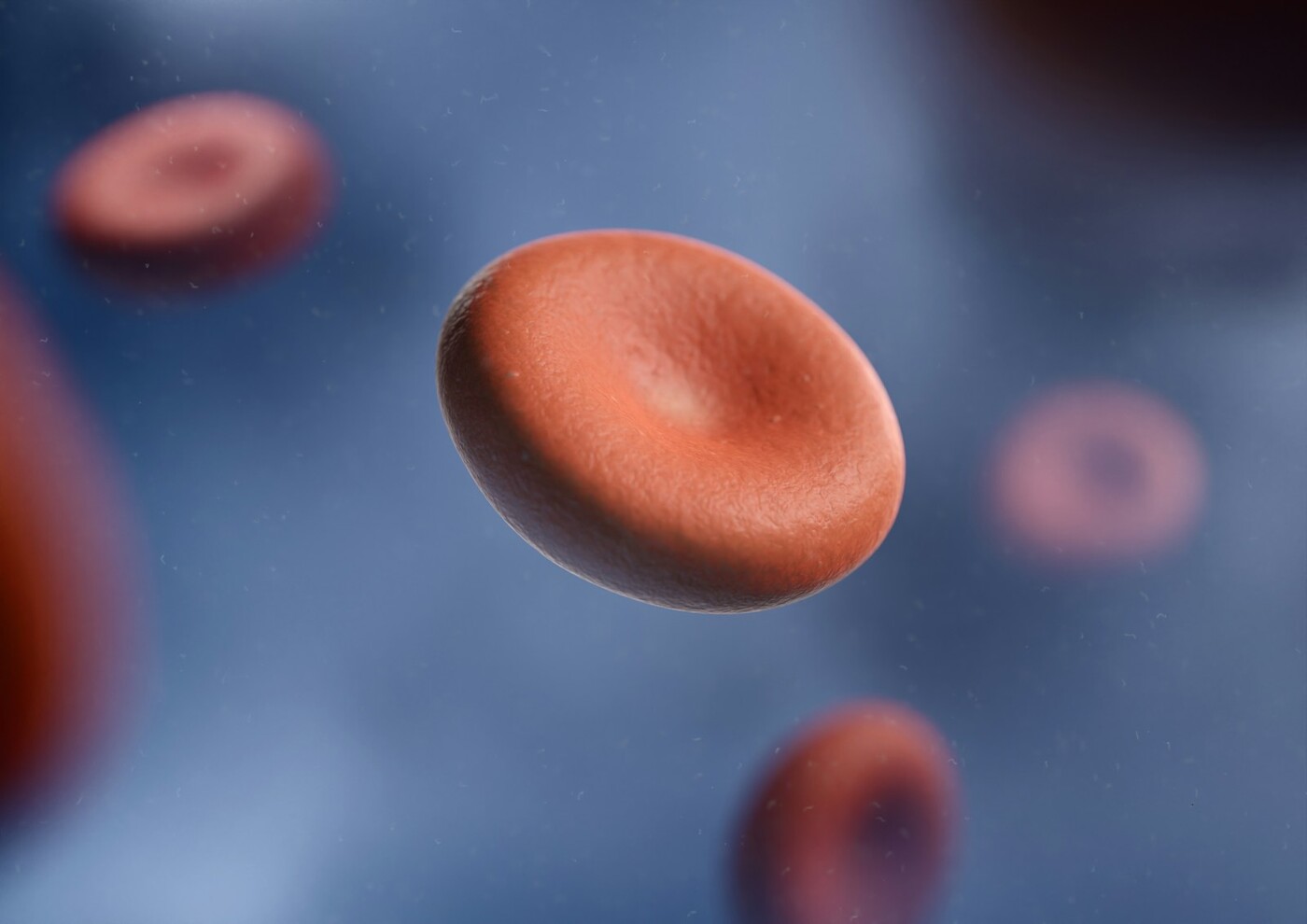
Every repair your body performs runs on delivery and removal. Blood brings in oxygen, nutrients, growth factors, and repair cells. It carries out waste and inflammatory debris. Where blood flows freely, healing tends to move quickly. Where it does not, healing crawls.
Now consider the tissues that give people the most trouble:
- Tendons. Dense, rope-like, and relatively poorly supplied with blood compared to muscle. Certain zones, like parts of the Achilles and the rotator cuff, are especially sparse.
- Ligaments. Similar story. They are built for stability, not for metabolic activity, so they have limited vascular support.
- Cartilage. The extreme case. Articular cartilage has essentially no direct blood supply and relies on joint fluid to move nutrients in and out.
- Older or previously injured tissue. Scar tissue and long-standing degenerative areas often have reduced circulation compared to healthy tissue nearby.
Muscle, by contrast, is richly vascular, which is one reason a muscle strain often settles down faster than a tendon problem of similar severity. So when a patient in East Cobb tells us their knee or shoulder has been nagging for a year, the underlying issue is frequently not that the body refuses to heal. It is that the body cannot get enough resources to the site to finish the job.
What Angiogenesis Actually Means
Angiogenesis is the formation of new blood vessels from existing ones. Your body does this routinely: during growth, during wound healing, during adaptation to exercise. Tiny capillaries sprout and extend into tissue that needs more supply.
It is worth being precise here. Angiogenesis is a researched biological mechanism that scientists have studied in connection with shockwave energy. It is not a promise, it is not a guaranteed outcome, and it is not one of SoftWave's FDA-cleared indications. What is cleared, and what we can state plainly, is that SoftWave is cleared for a temporary increase in blood flow, activation of connective tissue, and temporary relief of minor muscle and joint pain. The angiogenesis conversation is about the mechanisms researchers believe are being stimulated underneath those effects.
The Signaling Research Points To
SoftWave TRT is electrohydraulic. A spark creates an acoustic wave, and a patented parabolic reflector shapes that wave into a broad-focused field that travels through skin and into deeper tissue. It is the only broad-focused shockwave technology of its kind. Radial devices scatter energy near the surface and unevenly. Electromagnetic systems lose energy quickly and lack depth. Piezoelectric devices concentrate energy at a single tight point, which limits how much tissue you can treat. Broad-focused energy is designed to reach a meaningful volume of tissue at depth.
When that mechanical energy reaches cells, research suggests it triggers a signaling cascade. A few of the players that come up repeatedly in the literature:
- VEGF (vascular endothelial growth factor). This is the body's primary signal for building new blood vessels. Research indicates shockwave energy is associated with increased VEGF expression, which is thought to be a driver of the angiogenic response.
- eNOS (endothelial nitric oxide synthase). This enzyme helps produce nitric oxide, which relaxes vessel walls and improves local circulation. It also plays a supporting role in vessel formation, so it is thought to work alongside VEGF rather than separately from it.
- Resident stem cell activation. Your tissues contain their own populations of repair-capable cells. Research suggests acoustic wave energy helps activate these resident cells and encourage them to migrate toward the treated area. Nothing is injected and nothing is harvested. The idea is to recruit what is already there.
- PCNA (proliferating cell nuclear antigen). A marker tied to cells actively dividing. Its presence is used in research as evidence that a proliferative repair response is underway.
- BMP (bone morphogenetic proteins). A family of signals involved in building and organizing structural tissue, including collagen, the main building material of tendon and ligament.
If a stubborn tendon, knee, or shoulder has been on your list for months, a conversation is the practical next step. Schedule a visit with SoftWave East Cobb and let Dr. Drilling assess whether your situation is a reasonable fit.
Read together, the picture research paints is a sequence: mechanical stimulation, then signaling, then improved local supply, then repair cell activity, then new structural tissue. SoftWave is designed to start that sequence in tissue that has gone quiet.
Inflammation and Cellular Housekeeping
Two other mechanisms belong in the same conversation. Research points to shockwave energy modulating inflammation rather than simply shutting it off, partly through regulation of toll-like receptors, and to helping clear senescent cells, worn-out cells that linger in tissue and interfere with normal repair signaling. Better supply plus a cleaner local environment is a more favorable setting for healing than either one alone.
What Treatment Is Actually Like
The clinical experience is simpler than the biology.
- Non-invasive. No needles, no drugs, no surgery, no incisions.
- Sessions typically run about ten to fifteen minutes.
- No downtime. Most people head straight back to work or errands.
- Care is usually delivered as a series over roughly six to eight weeks, because biological repair is cumulative.
- Many patients report that improvement continues for weeks or months after the final session, which fits the mechanism: you are stimulating a process, not installing a part.
That last point matters for expectations. A tissue-level response does not happen in one visit any more than fitness happens in one workout. Results vary, and SoftWave is not a cure or a substitute for medical advice from your physician.
Why the Explanation Matters
People come to us frustrated, having been told their only remaining options are ongoing medication, injections, or eventually surgery. Understanding that poor blood supply is often the real bottleneck reframes the problem. The question becomes whether the tissue can be given a better environment to work in.
SoftWave technology has been studied at leading institutions and is used by clinicians who work with professional and collegiate athletes. Dr. Drilling will review your history, examine the area, and give you a straight answer about whether this approach makes sense for you.
Ready to Take the Next Step?
If a tendon, ligament, or joint problem has outlasted every reasonable amount of rest, the tissue may simply need better circulation and a stronger repair signal. Find out whether SoftWave is a sensible option for your situation.
Request your SoftWave Therapy Discovery Day online today
Contact SoftWave East Cobb
SoftWave East Cobb
1000 Johnson Ferry Road, Suite D-100
Marietta, GA 30068
Phone: (404) 775-3988
Office Hours: Monday and Tuesday 9:00am to 2:00pm, Thursday 12:00pm to 6:30pm
‹ Back
 1000 Johnson Ferry Road